
How to Choose an HVAC Air Filter for a North Texas Home
Short answer: Choose an HVAC filter based on your system's airflow capacity rather than buying the highest MERV rating available. High-MERV 1-inch pleated filters create...
By Everyday Home Advice Editorial Team
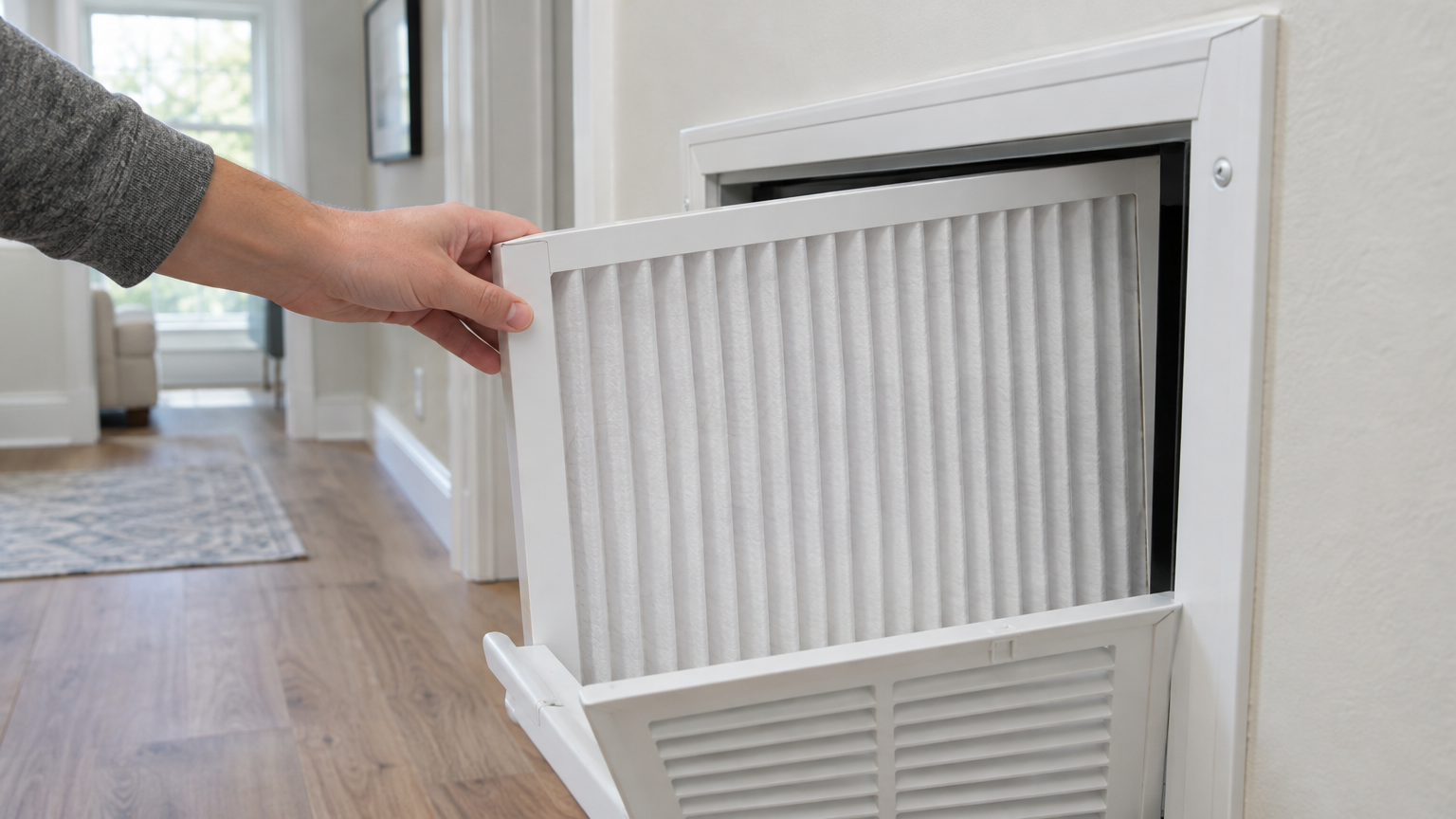
Short answer: Choose an HVAC filter based on your system's airflow capacity rather than buying the highest MERV rating available. High-MERV 1-inch pleated filters create excessive static pressure resistance, which restricts airflow, increases energy usage, and risks freezing the evaporator coil. For standard 1-inch filter slots, a MERV 8 to 11 filter balances dust capture with safe airflow. Homes requiring higher filtration should upgrade to a 4-inch or 5-inch media cabinet installed by a licensed Texas A/C contractor.
Signs of an incorrect or restricted air filter
A filter with too much air resistance or built-up debris alters system performance quickly. Common indicators include weak airflow coming from supply vents, longer cooling cycles, and unusual whistling or roaring sounds at the return air grill. If airflow drops significantly, heat cannot be extracted from the indoor air effectively. The evaporator coil temperature drops below freezing, leading to ice formation along the copper refrigerant lines and air handler casing. In severe cases, restricted airflow can overheat blower motors, trip thermal overload switches, and crack heat exchangers during winter heating cycles. A completely clogged or undersized filter also forces air around the frame edges, pulling unfiltered dust directly into the equipment cabinet.
Understanding MERV ratings and static pressure
Minimum Efficiency Reporting Value, or MERV, measures how effectively a filter captures particles of varying sizes. However, higher MERV ratings require denser filter media, which increases resistance to airflow, known as static pressure.
MERV rating categories
- MERV 1 to 4: Standard fiberglass panel filters. These capture large lint and dust clumps to protect internal components, but offer minimal airborne particle filtration. They present very low resistance to airflow.
- MERV 8 to 11: Pleated synthetic filters. These capture pollen, dust mite debris, fine dust, and pet dander. They represent a balanced choice for standard 1-inch filter slots when replaced regularly.
- MERV 13 and above: High-efficiency filters designed to capture fine particles, smoke, and smog. In a thin 1-inch frame, these filters significantly restrict airflow unless the ductwork system is engineered for high static pressure.
When resistance exceeds the blower motor's design limits, total cubic feet per minute (CFM) drops. To safely use MERV 13 or higher ratings, increase the filter surface area by installing a 4-inch or 5-inch deep media cabinet. Deeper pleats allow greater surface area, providing fine particle filtration without choking airflow.
North Texas HVAC demands and attic air handlers
In the Dallas-Fort Worth area, air handlers and furnaces are frequently located in unconditioned attics. During summer months, attic temperatures rise dramatically, placing extreme heat loads on the equipment cabinet and return air ductwork. Because cooling seasons extend for several months, blower motors run for thousands of hours each year. Restricting airflow with an overly dense filter under these heavy operating conditions causes the motor to run hotter and work harder. Additionally, expansive clay soil around home foundations creates fine dust that mixes with native pollen and seasonal ragweed. This dust loads air filters faster than in mild climates. A filter that lasts three months during spring can clog in four weeks during sustained mid-summer cooling operations.
Safe homeowner inspections and safety precautions
Homeowners can inspect and change filters safely by following basic steps, but certain system components require professional handling.
Safe homeowner checks
- Verify filter dimensions and directional airflow arrows printed on the frame before installation. The arrow must point toward the air handler blower motor.
- Check for gaps around the filter edge. A loose frame allows unfiltered air to bypass the media, dirtying the evaporator coil and blower assembly.
- Inspect the return grill and filter cabinet for physical collapse or a bowed frame, which indicates excessive suction pressure.
- Inspect the air filter monthly during heavy cooling periods. Replace 1-inch filters whenever the media turns grey or shows a visible layer of surface dirt.
What not to touch
Do not open electrical access panels on the air handler or touch internal wiring, capacitors, or blower motor connections. Avoid adjusting or touching copper refrigerant lines, as these operate under high pressure and temperature extremes. If an evaporator coil is frozen solid, turn the cooling system off at the thermostat and set the fan to on to let the ice melt safely before calling a technician.
Professional testing and filter cabinet upgrades
When airflow issues persist despite clean filter changes, a professional evaluation is required. Air conditioning contractors in Texas are licensed through the Texas Department of Licensing and Regulation (TDLR) to inspect and service mechanical equipment.
What a technician tests
A technician measures Total External Static Pressure (TESP) using a dual-port manometer inserted into the ductwork before and after the air handler. They verify airflow volume in CFM and measure the temperature drop across the evaporator coil. If static pressure is too high, the contractor evaluates duct sizing, return grill openings, and blower speed settings.
Repair versus replace options
If a home's single 1-inch filter slot restricts airflow, the contractor can install a larger return air cabinet or convert the intake slot to accept a 4-inch or 5-inch deep media filter. Modifying ductwork or adding additional return vents balances system pressure better than repeatedly using thin, restrictive filters. Cost drivers for filter upgrades include:
- Cabinet size and physical accessibility within the attic space.
- Requirements for re-routing or modifying existing sheet metal ducts and flex ducts.
- Choice between basic media cabinets, electronic air cleaners, or whole-house purification units.
- Need for secondary return air runs to reduce pressure across the system.
Filter selection strategy and maintenance schedules
To protect equipment while maintaining indoor air quality, select filters based on cabinet depth and seasonal maintenance needs. For standard 1-inch return slots, select a pleated MERV 8 or MERV 11 filter. Check the filter every 30 days during high-demand summer months, and replace it at least every 30 to 60 days. Avoid washable electrostatic filters unless approved by the equipment manufacturer, as these filters often exhibit unpredictable airflow resistance and harbor moisture if installed while damp. For 4-inch or 5-inch media cabinets, use MERV 11 or MERV 13 media cartridges. These deep filters hold significantly more dust and typically require replacement only every 6 to 12 months. Ensure all cabinet doors and access panels fit tightly to prevent drawing hot, dusty attic air directly into the HVAC airstream.
Common questions
Can a high-MERV filter damage my air conditioner?
Yes. A high-MERV filter in a standard 1-inch slot can create too much airflow resistance for standard blower motors. This restriction leads to reduced air delivery, frozen indoor coils, elevated energy usage, and potential blower motor failure.
How often should I change my HVAC filter in North Texas?
Inspect 1-inch filters monthly during peak summer cooling operations and replace them every 30 to 60 days. If you have pets or live near active construction, replace 1-inch filters every 30 days. Deep 4-inch or 5-inch media filters generally last 6 to 12 months.
Why does my air filter bow or collapse inward?
A collapsing filter frame indicates excessive negative pressure behind the filter. This happens when the filter MERV rating is too high for the system, the filter is clogged with dirt, or the return ductwork is undersized for the system's airflow requirements.
Should I use washable air filters?
Washable electrostatic filters are generally not recommended. They often restrict airflow significantly and can encourage mold growth within the air handler cabinet if reinstalled before completely dry.