
Heat Pump Running on Auxiliary Heat: Normal or Expensive Problem?
Short answer: Auxiliary heat running during freezing North Texas cold spells or brief defrost cycles is completely normal. However, if your auxiliary heat indicator stays on...
By Everyday Home Advice Editorial Team
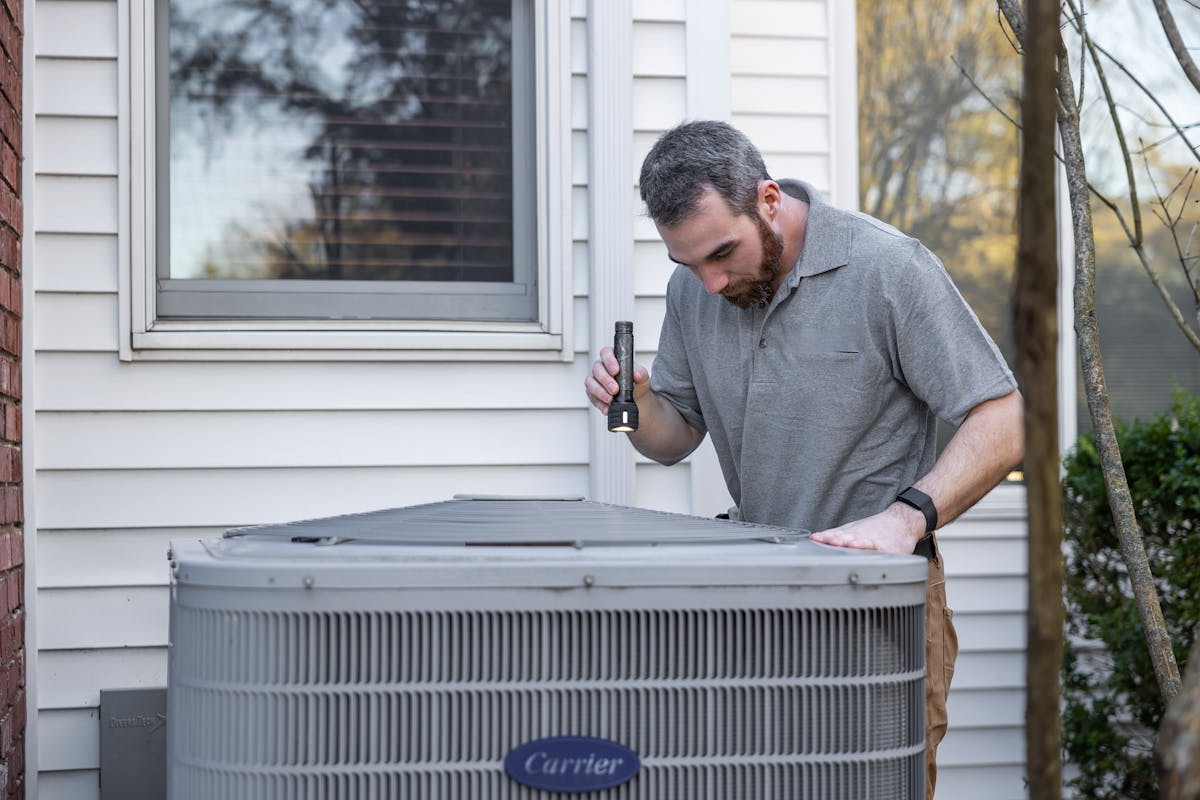
Short answer: Auxiliary heat running during freezing North Texas cold spells or brief defrost cycles is completely normal. However, if your auxiliary heat indicator stays on during mild outdoor temperatures or runs continuously for many hours, it usually indicates a system fault, low refrigerant charge, a failing reversing valve, or an improperly configured thermostat that significantly increases electricity consumption.
Understanding heat pump balance points and auxiliary heat
A residential heat pump heats your home by extracting heat energy from outdoor air and transferring it indoors. As outdoor temperatures drop, the amount of available heat in the outside air decreases, which reduces the heating output of the heat pump. Every home and heat pump combination has a specific temperature known as the thermal balance point. Above this outdoor temperature, the heat pump provides enough warmth to meet your thermostat setpoint independently. When the outdoor temperature falls below the balance point, the heat pump requires assistance from a secondary heat source. In North Texas homes, this secondary heat source is almost always an electric resistance heat strip assembly built into your indoor air handler. When engaged, your thermostat displays an indicator such as AUX, AUX HEAT, or HEAT 2. Auxiliary heat acts as a supplemental booster to maintain indoor comfort when outdoor air alone cannot supply enough energy.
Normal vs. abnormal auxiliary heat behavior
To determine whether your system requires professional repair, compare your heat pump's operational behavior against the conditions listed below.
| Operational Scenario | Outdoor Temperature | Thermostat Indicator | Status | Operational Cause |
|---|---|---|---|---|
| Prolonged winter freeze | Below 35 degrees Fahrenheit | AUX or AUX HEAT | Normal | System has reached its thermal balance point and uses electric coils to supplement heat pump output. |
| Defrost cycle operation | 30 to 42 degrees Fahrenheit | AUX (briefly, 5 to 15 minutes) | Normal | Outdoor unit temporarily switches to cooling mode to melt ice on coils; aux heat prevents cold indoor air drafts. |
| Large thermostat adjustment | Any temperature | AUX (temporary) | Normal | Setpoint raised by two or more degrees; auxiliary heat turns on to bring indoor air to temperature rapidly. |
| Mild outdoor weather | Above 45 degrees Fahrenheit | AUX (continuous) | System Fault | Refrigeration circuit issue, failing reversing valve, low refrigerant level, or incorrect thermostat wiring. |
| Manual emergency heat selection | Any temperature | EMER or EMER HEAT | Manual Lockout | Thermostat manually set to Emergency Heat, locking out compressor and using electric strips exclusively. |
Primary causes of auxiliary heat activation
Understanding why auxiliary heat turns on helps homeowners recognize whether their system is operating correctly or experiencing a mechanical breakdown.
Outdoor temperature drops below the balance point
During cold weather outbreaks in the Dallas-Fort Worth area, outdoor temperatures can hover near or below freezing for extended periods. When this occurs, the heat pump compressor operates continuously, and the control board automatically engages the auxiliary electric heat strips to cover the heating deficit.
Active defrost routines
When outdoor temperatures range from the mid-30s to low-40s with moisture present in the air, frost can accumulate on the outdoor coil. The system periodically enters a defrost cycle to melt this frost buildup. During defrost mode, the heat pump briefly shifts back into cooling mode to send hot refrigerant to the outdoor coil, while the auxiliary electric heat strips energize inside to prevent cold air from blowing through your home's air vents.
Thermostat setpoint jumps
If you raise the thermostat setpoint by two or more degrees at once, the thermostat logic assumes the home needs rapid heating. It energizes the auxiliary electric strips to bridge the gap quickly. Once the room temperature nears the target setpoint, the auxiliary heat should automatically turn off, leaving the compressor to finish heating the space.
Mechanical and electrical component faults
If auxiliary heat remains on continuously while outdoor temperatures are mild, a hardware component may have failed. A stuck reversing valve, a failing defrost control board, a faulty outdoor temperature sensor, or a loss of refrigerant will prevent the heat pump compressor from producing adequate heat, forcing the system to rely entirely on electric resistance backup.
Safe homeowner checks and precautions
Before calling a professional technician, homeowners can safely inspect several basic items without risking injury or equipment damage. Check the thermostat setting: Ensure the thermostat is set to standard HEAT mode rather than EMER (Emergency Heat). Emergency heat locks out the outdoor unit completely, running energy-intensive heat strips continuously. Verify thermostat setpoint shifts: Avoid making large temperature setpoint adjustments. Set the thermostat to a stable temperature to prevent unnecessary auxiliary heat engagement. Inspect the indoor air filter: A clogged air filter restricts airflow across the indoor coil, which can cause heat pump sensors to trip or perform inefficiently. Replace dirty filters promptly. Check the outdoor unit for blockages: Look at the outdoor heat pump cabinet to make sure leaves, trash, or dense foliage are not blocking airflow through the side grilles or top fan discharge.
Tasks to leave to licensed HVAC professionals
HVAC systems use high-voltage electricity and pressurized chemicals that can present severe safety risks. Homeowners should avoid opening electrical panels or attempting internal repairs. Never touch electrical panels or wiring: Air handlers and heat pumps contain high-voltage capacitors and circuits capable of causing severe shock or injury. Never attempt to handle refrigerant lines: Refrigerant circuits operate under high pressure. Leaks or improper handling can cause chemical burns, equipment failure, and environmental harm. Never attempt to scrape ice off outdoor coils: Using sharp tools, screwdrivers, or hot water to remove heavy ice buildup from outdoor coils can puncture delicate copper tubing and permanently destroy the coil assembly. Never adjust internal control boards or sequencers: Contactors, relays, and heat strip sequencers inside the air handler should only be tested and replaced by qualified professionals. In Texas, air conditioning and heating contractors are licensed through the Texas Department of Licensing and Regulation (TDLR), which verifies technical competency and insurance requirements.
Professional diagnostics and potential repairs
When a technician arrives to diagnose a system stuck in auxiliary heat mode, they follow a systematic diagnostic process to isolate the root cause. A TDLR-licensed air conditioning contractor will inspect refrigerant pressure levels to verify that the closed loop system does not have a leak. They test the reversing valve solenoid to ensure the valve properly shifts between heating and cooling modes. Technicians also evaluate the defrost control board, outdoor ambient temperature sensors, and defrost thermostats to confirm the system transitions smoothly in and out of defrost routines. If diagnostic testing reveals an issue, potential repairs may include replacing a failed defrost board, repairing a refrigerant leak and recharging the system, replacing a faulty outdoor temperature sensor, or replacing failed contactors and heat strip sequencers inside the air handler.
Energy consumption and repair cost drivers
Operating auxiliary electric heat strips consumes significantly more electrical power than running a heat pump compressor. A heat pump moves heat from one location to another, providing efficient warmth. In contrast, electric resistance heat strips convert electrical energy directly into thermal energy at a one-to-one ratio. When auxiliary heat runs unnecessarily during mild North Texas weather, electric utility bills can increase dramatically over a single billing cycle. Several factors influence the overall cost of restoring your heat pump system: Component accessibility and type: Replacing an accessible outdoor sensor or relay takes less diagnostic and labor time than replacing an internal reversing valve or sealed refrigerant component. Refrigerant repair complexity: If a system has a refrigerant leak, the technician must locate the leak, repair the damaged line, evacuate the system under a vacuum, and recharge the system with the appropriate refrigerant type. * System age and compatibility: Older systems utilizing obsolete components may require extra sourcing time or updated control module conversion kits.
Repair versus replacement for heat pump systems
When faced with a major heat pump failure, such as a burnt-out compressor or a severely leaking coil, homeowners must weigh the choice between repairing the existing unit or installing a new heating and cooling system. If your heat pump is relatively modern, properly sized, and otherwise in good mechanical condition, replacing individual control boards, sensors, or reversing valves is generally the most practical choice. However, if the system is aging, requires repeated repairs, or uses outdated refrigerant, investment in a full system replacement may be more practical. Modern heat pumps offer higher heating efficiency, lower thermal balance points, and advanced defrost algorithms that minimize the need for auxiliary heat activation.
Winter operation in North Texas
North Texas winter weather presents unique challenges for heat pumps. As documented by the National Weather Service Fort Worth, the region frequently experiences rapid temperature drops where mild, humid conditions shift to freezing weather within hours. High humidity levels during temperatures hovering near freezing can cause frost to accumulate rapidly on outdoor heat pump coils, leading to frequent defrost cycles. Understanding how your heat pump reacts to these sudden regional weather changes can help you recognize normal operation and avoid unnecessary service calls during routine freeze-and-thaw cycles.
Preventive maintenance steps
Taking proactive measures helps ensure your heat pump operates efficiently throughout the winter heating season. Replace air filters regularly: Swap out air filters every one to three months to maintain proper airflow across your indoor heating components. Maintain outdoor clearance: Maintain clear space around your outdoor heat pump unit, removing weeds, leaf litter, and overhanging branches. * Schedule professional pre-winter tune-ups: Have a TDLR-licensed HVAC contractor inspect and service your system each autumn. A professional tune-up includes checking refrigerant levels, testing heat strip sequencers, verifying defrost board operation, and cleaning outdoor coils.
Common questions
Is emergency heat the same as auxiliary heat?
Auxiliary heat and emergency heat use the same electric resistance heat strips inside your air handler, but they are triggered differently. Auxiliary heat engages automatically as a supplemental booster while the compressor continues running. Emergency heat is a manual setting on your thermostat that locks out the outdoor heat pump entirely and relies exclusively on electric heat strips.
Can running auxiliary heat continuously damage my heat pump?
Running auxiliary heat continuously will not damage the heat strips themselves, but it indicates that your primary heat pump compressor is not functioning correctly or is locked out. Running on continuous electric resistance heating results in exceptionally high electricity bills and conceals underlying refrigeration system faults.
Why does my heat pump switch to auxiliary heat when I turn up the thermostat?
Most digital thermostats automatically engage auxiliary heat whenever you increase the target setpoint by two or more degrees above the current indoor temperature. The thermostat interprets the large gap as a request for rapid heating and activates the secondary electric heat strips to warm the home faster.
What should I do if my outdoor heat pump is completely covered in solid ice?
A light layer of frost on the outdoor unit is normal before a defrost cycle, but a solid block of ice enveloping the entire outdoor cabinet indicates a fault in the defrost system, low refrigerant levels, or restricted airflow. Turn off the heating system at the thermostat to prevent compressor damage and contact a licensed HVAC technician to inspect the unit.
Sources
- U.S. Department of Energy Heat Pump Systems: https://www.energy.gov/energysaver
- National Weather Service Fort Worth Weather Data: https://www.weather.gov/fwd/
- Texas Department of Licensing and Regulation HVAC Licensing: https://www.tdlr.texas.gov/