
The Complete Guide to Heating & Cooling in Dallas–Fort Worth
Quick answer: Most cooling problems in a DFW home come down to one of five things: restricted airflow, a refrigerant or mechanical fault, a control or thermostat problem, a...
By Everyday Home Advice Editorial Team
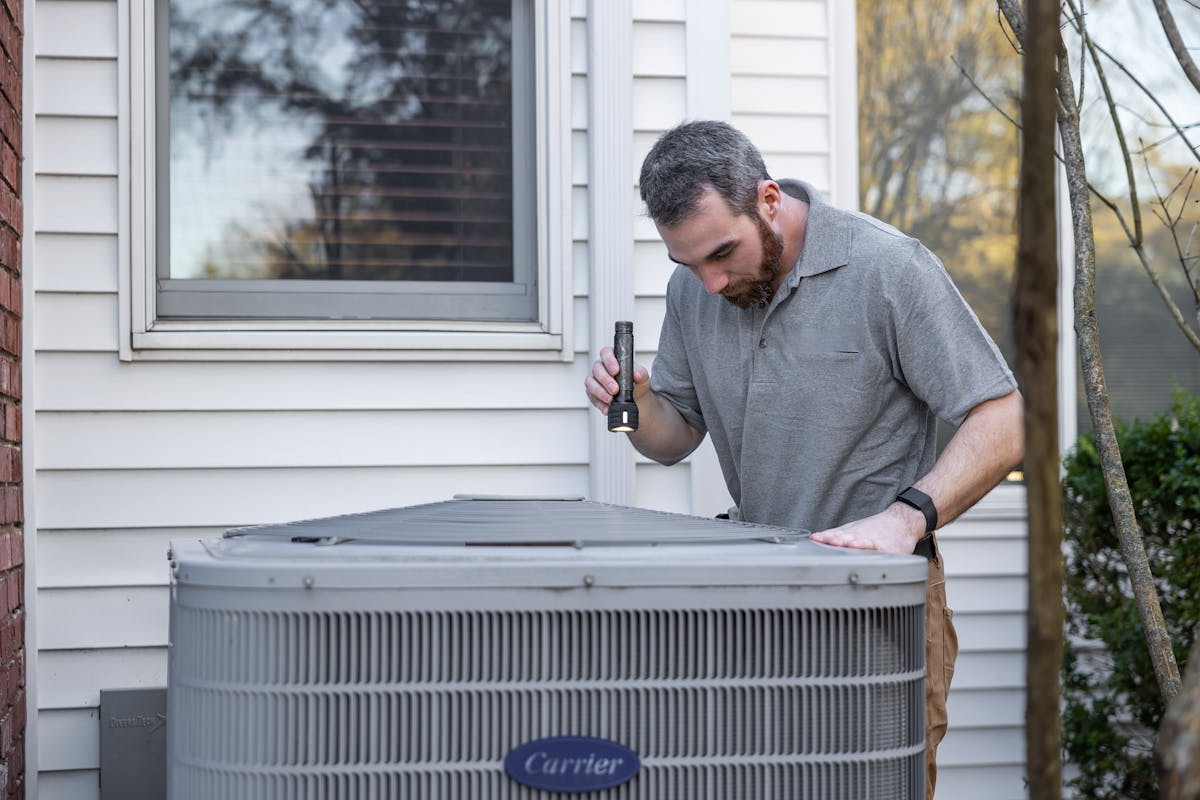
Quick answer: Most cooling problems in a DFW home come down to one of five things: restricted airflow, a refrigerant or mechanical fault, a control or thermostat problem, a drainage issue, or equipment that is simply past its useful life. You can narrow it down from the symptoms without touching refrigerant lines, and that is the point of this guide. North Texas asks a lot of an air conditioning system. Cooling season starts early, runs late, and includes stretches where the equipment runs almost continuously. Then winter arrives with a handful of hard freezes that test the heating side of the same system. A house that stays comfortable through both is not lucky; it is usually maintained.
Start with the symptom, not the equipment
Homeowners often begin by assuming the worst, which usually means assuming replacement. It is more useful to describe what the house is doing.
- Running but not cooling. The system is on, air is moving, and the house does not get cool. This points at airflow, refrigerant charge, or a coil problem rather than a dead system. Read Why Is My AC Running but Not Cooling?
- Blowing warm air. Air is moving but it is not conditioned. That is a different fault than weak airflow. Read Why Is My AC Blowing Warm Air?
- Running constantly. The system never reaches the setpoint. Sometimes that is the weather, sometimes it is the house, sometimes it is the equipment. Read Why Is My AC Running Constantly?
- Short cycling. It turns on and off in short bursts. Read Why Does My AC Keep Turning On and Off?
- Water where it should not be. A drain line, pan or coil is involved. Read Why Is My AC Leaking Water?
- Freezing up. Ice on the lines or coil means the system is running in conditions it cannot handle. Read Why Is My AC Freezing Up?
- Uneven rooms. One room never catches up. Read Why Is One Room Hotter Than the Rest?
- Noises. New sounds are worth identifying early. Read Why Is My HVAC Making a Strange Noise?
Airflow is where most homeowner fixes live
Before any refrigerant question, airflow deserves a check. A system moves a specific volume of air through a specific duct system, and when that balance changes, cooling performance drops everywhere. The filter is the simplest variable. A clogged filter restricts return air, which reduces the air the system can cool and can freeze a coil. How often a filter needs changing depends on the filter, the home, pets and how much dust is in the air, which is why How Often Should You Change Your HVAC Filter? does not give a single number for every house. Return air matters as much as supply. A house with too few return grilles, or a return blocked by furniture, will struggle no matter how well the equipment works. Closing vents in unused rooms feels efficient and often is not, because it changes system pressure rather than saving energy. That tradeoff is covered in Should You Close Vents in Rooms I Don't Use?
Drainage: the quiet failure
An air conditioner removes moisture from the air, and that water has to leave the house. A condensate line that clogs, a pan that does not drain, or a pump that has stopped working leads to water in a closet, attic or ceiling. It is one of a common reasons a cooling problem turns into a water damage problem, and it is entirely preventable. If you see water near the indoor unit, treat it as urgent even if the house is still cool. The AC guide above covers the common causes, and the water damage guide covers what to do about the moisture that already escaped.
What a professional actually does
A technician arriving at a system that is not cooling usually works in a sequence: confirm the call and the thermostat, check filter and airflow, inspect the indoor coil and drain, then measure refrigerant pressures and temperatures at the outdoor unit. That sequence explains why a diagnosis cannot be made over the phone and why "just add refrigerant" is not a repair. If a system is low on charge, the refrigerant went somewhere, and finding that leak is the actual work. Homeowners can reasonably check the thermostat, the breaker, the filter and visible water. Anything involving refrigerant, electrical components inside the cabinet, or gas is a boundary. What Homeowners Can Check Before Calling for AC Repair walks through that line.
What affects the cost
Repair cost depends on the failed component, how accessible it is, whether the system uses a refrigerant that is still widely available, and whether the failure caused secondary damage. Replacement cost depends on system size, efficiency, duct condition, and whether the existing setup needs corrections to work correctly. Neither number can be quoted honestly without looking at the house. The cost guides explain the variables: HVAC repair cost factors and HVAC replacement cost factors.
Repair or replace?
Age alone is a poor reason to replace a working system. Better questions: how often has it needed repairs, is the failure in a major component, is the refrigerant type becoming expensive to service, and would a new system require duct or electrical work that changes the total? Should I Repair or Replace My HVAC System? covers the decision without pretending there is one right answer.
What matters in North Texas
Three local factors genuinely change the advice. Length of the cooling season. Equipment here accumulates run hours faster than in milder climates, so maintenance intervals and filter changes matter more, not less. Attic equipment and attic heat. When the air handler and ducts live in an attic that reaches extreme temperatures, duct insulation and attic ventilation affect performance directly. Freeze events. The same system that cools in August has to survive a hard freeze. Winter preparation is not optional here, and the damage from a missed step tends to be plumbing, not HVAC. The seasonal approach is covered in the seasonal maintenance checklists, and the heating side starts with Why Won't My Furnace Turn On?
Frequently asked questions
How long should an AC last in Texas? Systems in this climate run far more hours per year than in cooler regions, and expected service life is usually discussed in terms of run hours and maintenance history rather than a fixed number of years. A well-maintained system can outlast a neglected one by a wide margin. Is it normal for the AC to run all afternoon in summer? On a design-condition day, a properly sized system may run for long stretches. The question is whether the house reaches its setpoint by evening and whether the run time is much longer than in previous years. Should I set the thermostat higher during the day? A modest setback can reduce run time, but a large swing makes the system work hard to recover during the hottest part of the day. Comfort and equipment wear both matter. Can I add refrigerant myself? No. Refrigerant handling requires equipment and licensing, and adding charge without finding the leak treats a symptom.
Next step
If you have a symptom, use the matching guide above and work through the safe checks. If you are choosing a contractor, Questions to Ask Before Hiring a Home Service Company is the practical filter, and Find Local Help shows service options by area.