
What Affects the Cost of Hiring an Electrician?
Short answer: The cost of hiring a licensed electrician depends on project scope, diagnostic complexity, accessibility, material grade, and municipal permitting requirements....
By Everyday Home Advice Editorial Team
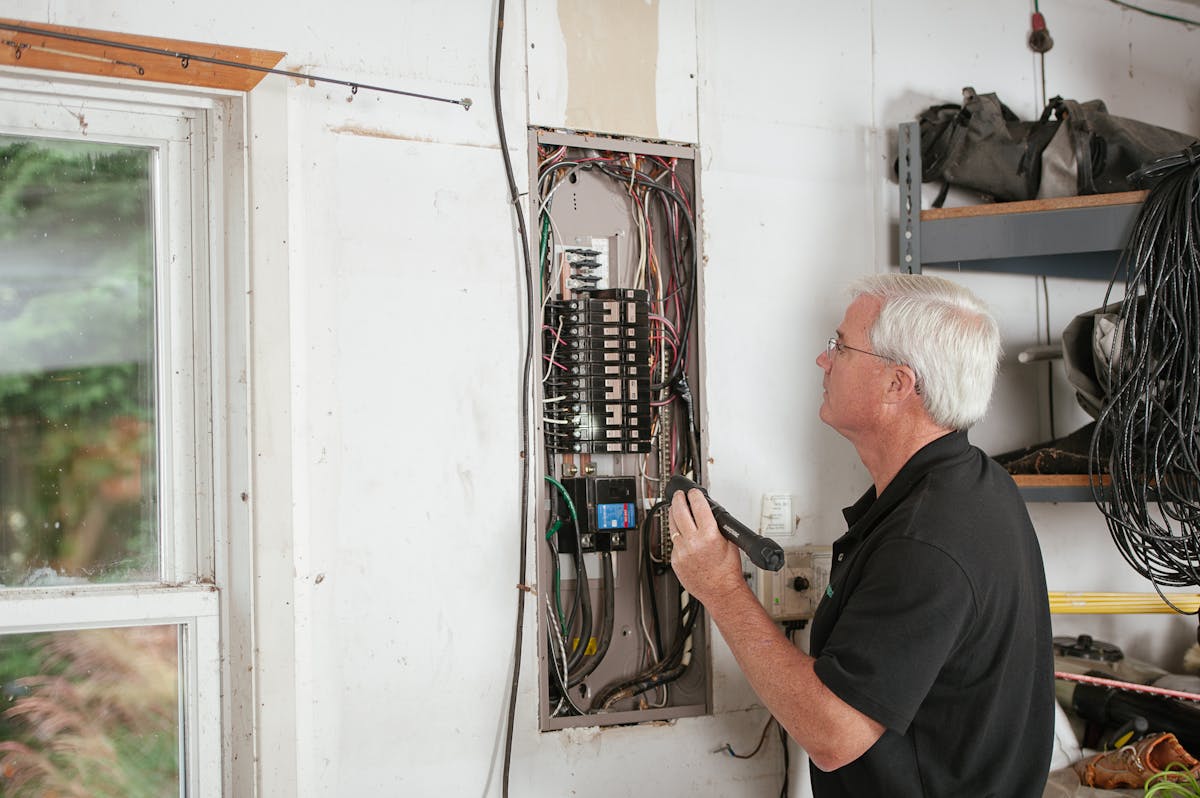
Short answer: The cost of hiring a licensed electrician depends on project scope, diagnostic complexity, accessibility, material grade, and municipal permitting requirements. Straightforward fixture replacements on easily accessible circuits require standard labor time, whereas troubleshooting intermittent electrical faults, upgrading main breaker panels, working inside hot attics, or updating older wiring systems increases total labor hours, specialized testing requirements, and overall project costs.
Job scope, task complexity, and diagnostic labor
Electrical projects fall into two general categories: straightforward installations and diagnostic troubleshooting. Straightforward installations, such as adding a standard light fixture to existing wiring or replacing a wall switch, follow predictable timelines because the wiring paths and load calculations are already established. Diagnostic work involves isolating unidentified faults, intermittent power loss, or tripping breakers. Tracing an open neutral, locating a damaged wire behind finished walls, or identifying a ground fault hidden within a multi-outlet branch circuit requires systematic testing. Diagnosing an intermittent problem often takes more time than the actual physical repair. After-hours service dispatches, weekend calls, and emergency responses carry higher billing rates due to schedule adjustments, immediate routing, and off-hours staffing costs.
Homeowner safety checks and immediate hazards
Electrical issues present serious hazards, including electrical shock, arc flashes, and structural fires. Knowing what a homeowner can safely check versus what requires a professional prevents personal injury and further damage to the home's electrical system.
Safe homeowner checks
- Verify whether a circuit breaker has tripped to the center position and attempt a single reset by pushing it fully to the off position before switching it back on.
- Check whether a Ground Fault Circuit Interrupter (GFCI) outlet downstream or upstream has popped its reset button.
- Inspect switch plates and outlet covers visually for discoloration, scorching, or cracking without removing the plates.
- Unplug high-draw appliances from dead outlets to see if an overload condition caused the interruption.
High-risk areas to avoid touching
- Do not remove the deadfront cover panel of the main electrical breaker panel, as live service bus bars remain energized even when the main breaker is turned off.
- Do not touch exposed, frayed, or charred wiring anywhere in the home.
- Never handle electrical components, outlets, or breaker boxes while standing on damp ground or near standing water.
- Avoid forcing a circuit breaker that repeatedly trips back to the on position, as this bypasses protective design features and can cause conductor overheating.
Professional diagnostic testing procedures
In Texas, professional electricians are credentialed and regulated through the Texas Department of Licensing and Regulation (TDLR). Master and journeyman electricians use specialized equipment and testing protocols to pinpoint electrical issues safely. When dispatched for a service call, an electrician typically performs several diagnostic tests:
- Voltage drop and load testing: Using digital multimeters to measure voltage stability under operational loads, checking for improper conductor sizing or loose terminal connections.
- Continuity and resistance tracing: Checking the integrity of ground paths, neutral wire continuity, and circuit loops to locate broken conductors inside walls or junction boxes.
- Thermal inspection: Employing infrared thermal imaging cameras to identify hotspots inside breaker panels, subpanels, and high-use receptacles caused by loose lug screws or corroded contacts.
- Insulation resistance testing: Applying specialized meters to verify that wire insulation has not degraded, cracked, or sustained pest damage inside concealed spaces.
Wiring conditions, panel capacity, and material requirements
The existing age and condition of a home's electrical system significantly affect labor time and hardware costs.
Legacy wiring types
Homes constructed in earlier decades often feature legacy wiring systems that complicate modern upgrades. Branch circuits with aluminum wiring require specialized Copalum connectors, AlumiConn torque-rated blocks, or complete branch copper rewiring to prevent oxidation and loose connections that trigger electrical fires. Older cloth-insulated wiring or ungrounded two-wire systems require dedicated grounding paths or specialized GFCI protection to meet safety standards, adding materials and labor time to simple device replacements.
Panel capacity and modern code requirements
Modern electronics, high-efficiency HVAC equipment, and electric vehicle chargers place heavy demands on service panels. If an existing electrical panel lacks physical space or total amperage capacity, adding a new dedicated circuit requires a subpanel installation or a full panel upgrade. Modern electrical codes require Arc-Fault Circuit Interrupter (AFCI) breakers for living areas and GFCI devices for locations near moisture. AFCI and GFCI circuit breakers feature complex internal electronics and carry significantly higher material costs than standard single-pole breakers.
DFW climate, foundation, and local permitting factors
Regional building characteristics in the Dallas-Fort Worth area directly influence electrical labor conditions, component wear, and regulatory fees.
- Extreme attic temperatures: Summer heat inside North Texas attics regularly reaches levels that make prolonged physical labor hazardous. Electricians working in attics to run new wire, install junction boxes, or service air handler disconnects must work in early morning shifts or utilize two-person safety rotation crews, increasing total labor planning and on-site duration.
- Expansive clay soil and concrete slab foundations: Most DFW homes rest on concrete slab foundations, with electrical conduits buried beneath the slab or routed entirely through upper framing and attics. Soil movement caused by shrinking and swelling clay can stress underground service entrance conduits or damage physical ground rod connections. When slab conduit fails, rerouting circuits through attics requires extensive secondary wiring pathways.
- Grounding system dry-out: Extended dry periods in North Texas shrink clay soil away from ground rods, reducing earth contact efficiency. Correcting poor ground electrode resistance often requires driving secondary ground rods or installing chemical ground rods.
- Municipal permitting variances: Cities throughout the DFW Metroplex enforce distinct local code amendments, permit fee structures, and inspection schedules. A project requiring a simple permit in one municipality may require detailed plan submittals or full system smoke-detector interconnect upgrades in another.
Repair versus replacement considerations
Determining whether to repair individual components or undertake a complete system replacement depends on safety, age, and long-term capacity requirements. Repairing an isolated component, such as replacing a worn receptacle, securing a loose terminal screw, or replacing a single faulty breaker, is appropriate when the underlying system infrastructure is sound. Replacement becomes necessary when equipment reaches structural obsolescence. Obsolete breaker panels with known design defects, degraded bus bars, or melted breaker spaces cannot be safely repaired and require complete service replacement. Similarly, if cloth insulation crumbles when touched or aluminum connections show widespread thermal damage, replacing branch wiring pathways is safer and more cost-effective over time than patching individual failure points.
Common questions
Why do emergency or after-hours service calls cost more?
After-hours and emergency calls require dispatching a licensed electrician outside standard operating schedules. Higher rates compensate for schedule disruption, immediate travel availability, and operating vehicles during non-business hours.
Is the initial diagnostic fee included in the final repair cost?
Some electrical contractors apply or credit the diagnostic dispatch fee toward the total cost of the repair if the homeowner approves the work on the same visit. Other contractors keep diagnostic fees separate to cover the specialized labor time required for fault isolation.
Who is responsible for repairing drywall opened during electrical work?
Electricians generally focus exclusively on electrical wiring, boxes, and panel connections. While an electrician will minimize wall cuts while fishing wires through studs, homeowners are typically responsible for hiring a drywall repair contractor or completing patch and paint work separately.
Why do AFCI and GFCI breakers cost significantly more than standard breakers?
Standard circuit breakers only trip when current exceeds amperage limits or a direct short circuit occurs. AFCI and GFCI breakers contain advanced microprocessors that continuously monitor current waveforms and ground imbalances to prevent fires and electrocution, making the physical components far more expensive to manufacture.