
Dallas–Fort Worth Electrical Guide for Homeowners
Short answer: Dallas–Fort Worth electrical issues split into utility outages managed by the power provider and interior circuit faults managed by a licensed electrician. Signs...
By Everyday Home Advice Editorial Team
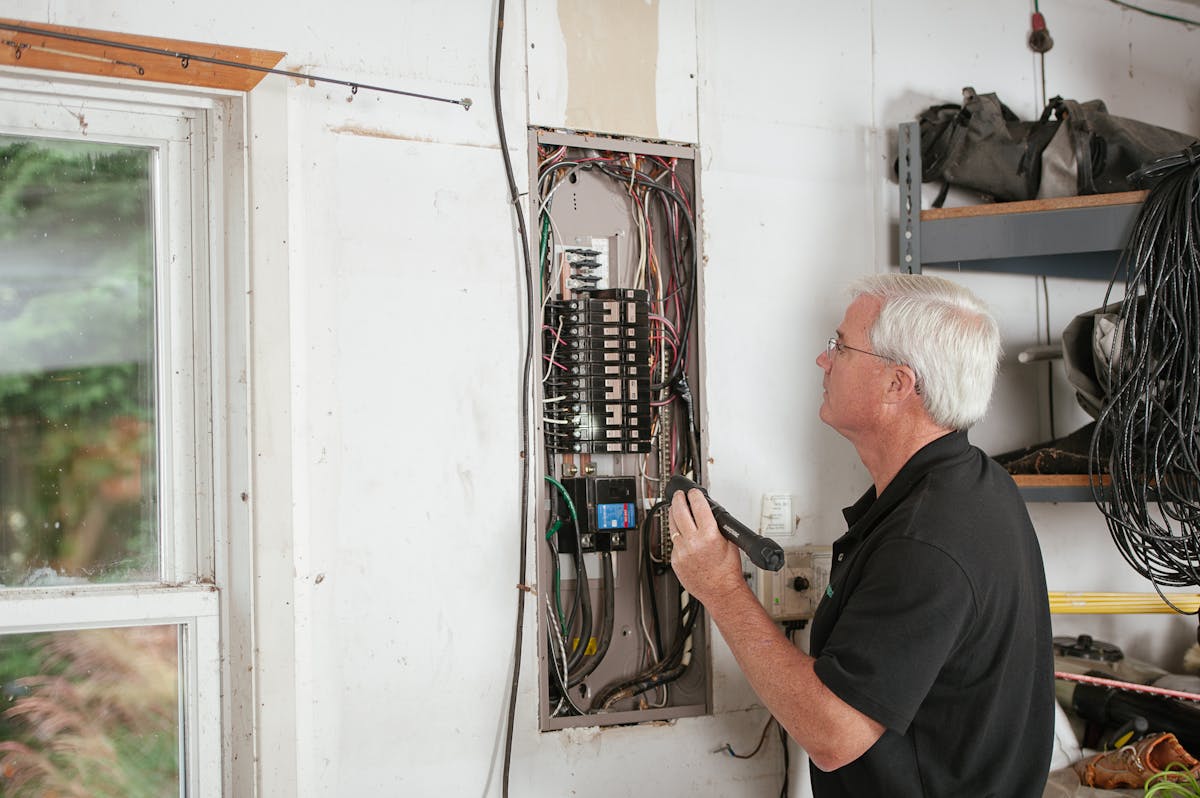
Short answer: Dallas–Fort Worth electrical issues split into utility outages managed by the power provider and interior circuit faults managed by a licensed electrician. Signs like buzzing switches, flickering lights, or tripping breakers require systematic troubleshooting to determine whether the problem stems from localized wiring, high thermal stress in attics, slab movement, or external utility supply failures. Homeowners can safely reset standard breakers and check wall outlets, but should never open main breaker panels, touch service entrance cables, or attempt structural rewiring.
Common Electrical Symptoms in Dallas–Fort Worth Homes
Identify symptoms early to prevent electrical fires or equipment damage. Burning odors near outlets or breaker panels signal overheating insulation, which presents an immediate fire risk. Buzzing light switches, warm wall plates, or outlets that fail to hold plugs securely indicate worn internal contacts or loose terminal screws. Lights that dim or flicker when a central air conditioner compressor or microwave starts up point to excessive voltage drop on shared circuits. A circuit breaker that trips repeatedly upon resetting indicates an active short circuit, a ground fault, or an overloaded branch circuit. If multiple outlets in a kitchen, bathroom, or outdoor space lose power simultaneously, a tripped ground-fault circuit interrupter (GFCI) is often responsible.
Utility Outages Versus Interior Wiring Faults
Distinguishing between a utility supply failure and an internal building fault ensures the correct authority handles the repair. Utility issues fall under the local distribution utility, whereas interior wiring falls under the homeowner's responsibility.
Signs of a Utility Service Issue
A utility outage is likely if neighboring homes lose power at the same time, streetlights go dark, or overhead service lines show physical damage after a severe thunderstorm. High winds or fallen branches can tear down the service drop cable connecting the utility pole to the home's weatherhead. Transformer explosions, marked by a loud bang prior to loss of power, also point directly to utility equipment failure.
Signs of an Interior Electrical Fault
Interior circuit faults typically affect a single room, a single branch circuit, or specific dedicated appliances. If the neighborhood has power but one bedroom or kitchen circuit dies, the fault resides inside the residence. Breakers that trip immediately when switched on, burning smells isolated to a single junction box, or localized voltage drops signal internal panel, wiring, or device failures.
How North Texas Climate and Foundations Impact Electrical Systems
The physical environment in Dallas–Fort Worth creates distinct challenges for residential electrical systems. Older homes built prior to the 1970s often feature two-wire ungrounded branch circuits, undersized service panels, or legacy aluminum wiring that expands and contracts under electrical loads, leading to loose connections. Newer suburban construction typically includes grounded circuits, arc-fault circuit interrupters (AFCI), and larger main panels, but may utilize builder-grade devices prone to early mechanical wear. Extreme summer heat drives attic temperatures far above outdoor ambient levels. Heavy electrical conductors feeding attic-mounted air handler units and central air conditioning equipment operate under continuous high thermal loads, accelerating insulation breakdown. Severe seasonal thunderstorms bring voltage surges, direct lightning strikes, and hail damage that can breach outdoor disconnect boxes or service masts. Soil dynamics in North Texas also affect buried electrical components. Expansive clay soil expands significantly when saturated during rainy seasons and shrinks intensely during hot dry spells. This repeated ground movement can stress slab foundations, shift underground conduit paths, shear sub-grade wiring connections for outdoor lighting, and pull exterior service equipment away from exterior walls.
Safe Homeowner Inspection Steps and Severe Hazards
Homeowners can safely perform basic visual checks and simple maintenance tasks without exposing themselves to live conductors.
Safe Inspection Checks
- Verify if neighboring properties have power during a loss of service.
- Check standard circuit switches to see if a breaker lever rests in the middle tripped position. Reset it firmly off, then back to the on position once.
- Press the test and reset buttons on GFCI receptacles in kitchens, bathrooms, garages, and outdoor locations.
- Plug a small table lamp into a dead outlet to confirm power loss before calling for service.
Unsafe Conditions and What Not to Touch
Never remove the dead-front cover of a main electrical panel or subpanel, as live bus bars remain exposed even when the main breaker is switched off. Do not touch meter enclosures, overhead drop wires, or service entrance cables entering the weatherhead. Never reset a breaker that produces a loud pop, visible arc flash, or immediate burning smell upon flipping. Water near electrical components poses extreme shock hazards. If a slab leak, plumbing burst, or roof leak saturates an electrical panel, outlet, or junction box, stay clear and request professional emergency service.
Professional Diagnostic Testing and Repair Options
Licensed electricians use specialized equipment to diagnose internal wiring faults accurately. They utilize digital multimeters to verify voltage levels, circuit mappers to trace hidden branch lines, thermal imaging cameras to locate hot spots behind drywall, and insulation resistance testers to locate damaged conductor jackets inside walls or conduit.
Repair Methods
Minor faults, such as a worn receptacle or a loose terminal screw, are resolved by replacing the individual device and re-terminating the conductors properly. Tripping AFCIs or GFCIs may require isolating neutral wires or replacing degraded breakers. Corroded outdoor disconnect switches damaged by heat or moisture require replacement with weather-rated enclosures.
Repair vs. Replacement Decisions
Individual device replacement or isolated junction box repairs are appropriate for modern, properly grounded wiring systems in good condition. However, full service panel replacement or total branch circuit rewiring becomes necessary when panels exhibit physical corrosion, melted bus bars, structural unreliability, or when obsolete wiring can no longer safely supply modern home power demands.
What Drives Electrical Repair and Upgrade Costs
The cost of residential electrical work varies based on several technical and logistical factors:
- System Accessibility: Wiring inside tight, high-heat attic spaces, covered crawl spaces, or beneath concrete slab foundations requires significantly more labor to access than wall-mounted fixtures.
- Scope of Work: Replacing a single wall outlet or circuit breaker involves minor labor, whereas a complete service panel upgrade, service mast repair, or whole-house surge protector installation requires extensive planning, material, and permit fees.
- Licensing and Permitting: In Texas, professional electrical work must be performed by electricians licensed through the Texas Department of Licensing and Regulation (TDLR). Municipalities within DFW require local electrical permits and municipal inspections for major panel modifications, service entry changes, and new circuit additions.
- Component Specifications: Weatherproof exterior components, high-ampacity breakers, whole-home surge suppression units, and copper conductors increase material expenses compared to standard interior components.
Common questions
What should I do if a breaker trips again immediately after resetting it?
Leave the breaker in the off position and do not attempt to force it on. A breaker that trips instantly indicates a direct short circuit, ground fault, or connected appliance failure. Continuing to reset a faulty breaker can damage internal conductors or trigger an electrical fire.
Why do my lights dim slightly when the air conditioner turns on?
Central air conditioning compressors draw a large initial burst of electrical current when starting up. This temporary high demand can cause a momentary voltage drop across shared circuits. If lights dim dramatically or stay dim, an electrician should evaluate the dedicated HVAC circuit, panel connection, and capacitor health.
How do I know if my electrical panel needs to be replaced?
Signs that a panel requires replacement include rust or corrosion on the steel box, scorching on bus bars, warm exterior panel covers, humming noises, or an inability to add new circuits due to physical space or power capacity limitations. Obsolete panels with known safety defects also warrant immediate replacement.
Are electricians required to be licensed in Texas?
Yes. Electrical contractors and individual electricians in Texas must hold active licenses issued by the Texas Department of Licensing and Regulation (TDLR). In addition, local DFW municipalities often require trade registration and permits for structural or panel-level electrical work.