
Why Is My Electric Bill Suddenly Higher in Summer?
Short answer: A sudden spike in summer electric bills usually stems from increased cooling equipment run time caused by extreme outdoor heat, restricted system airflow,...
By Everyday Home Advice Editorial Team
Short answer: A sudden spike in summer electric bills usually stems from increased cooling equipment run time caused by extreme outdoor heat, restricted system airflow, refrigerant leaks, or duct failures. In a deregulated energy market, an expiring fixed-rate electric plan converted to a higher variable rate can also cause your bill to jump even if overall kilowatt-hour consumption remains unchanged.
Differentiating High Usage From Rate Increases
Before assuming your air conditioner is malfunctioning, inspect your utility statement to compare kilowatt-hour usage against the billing rate. Electric bills reflect two primary variables: total energy consumed and the cost charged per unit of energy. In the Dallas-Fort Worth area's deregulated retail electricity market, homeowners choose independent retail electric providers. If a fixed-rate contract expires during early summer, the provider may automatically transition the account to a default month-to-month variable rate. This can substantially increase the total bill even when cooling consumption stays flat. If your statement shows that total kilowatt-hour usage spiked while the rate remained constant, your cooling system is running longer or drawing more electrical current than normal. Comparing your current kilowatt-hour usage to the exact same billing month from the previous year provides an accurate baseline that accounts for standard summer weather patterns.
Mechanical Cooling Issues That Increase Power Draw
Air conditioning equipment consumes more power than any other appliance in a home. When a component degrades, energy efficiency drops rapidly, forcing the compressor and blower fans to run continuously. A restricted air filter is a frequent cause of inflated energy bills. Dust and debris block airflow across the indoor evaporator coil, forcing the system to run extended cycles to reach the set temperature on your thermostat. Over time, restricted airflow can freeze the evaporator coil into a solid block of ice, turning the system into a constant power drain that supplies no cool air. Low refrigerant levels caused by microscopic pinhole leaks in copper coils force the compressor to operate non-stop. Refrigerant carries heat out of the home. When the charge drops, the system loses cooling capacity while maintaining maximum electrical draw. Electrical component failures, such as a weak run capacitor, force motors to draw excessive amperage. When capacitors fail, blower motors and compressor pumps overheat, operating inefficiently while pulling far more electricity through your main service panel.
North Texas Structural and Environmental Pressure
Local housing design and climate conditions put unique thermal stresses on residential air conditioning systems. Summer temperatures in North Texas consistently create high cooling degree days, forcing equipment to work against heavy heat loads for months at a time. Attic air handler placement is standard in local construction. During summer, unconditioned attic spaces often reach extreme temperatures well over one hundred degrees. When air ductwork installed in an attic develops tears, loose collar connections, or degraded insulation, the system pulls superheated attic air directly into the return stream or leaks cold supply air into the roof cavity. Expansive clay soil in the region swells with moisture and shrinks during dry summer heat spells. This soil movement causes subtle foundation shifting, which creates structural settling around door frames, window casings, and wall plates. These gaps allow hot, humid exterior air to penetrate the building envelope, constantly increasing the workload on your cooling system. Homes with expansive west-facing brick walls or unshaded double-pane windows retain solar heat late into the evening. Brick stores thermal energy during peak sun exposure and radiates that heat inward long after the sun sets, forcing air conditioners to run at peak capacity through the night.
Safe Homeowner Inspections and System Limits
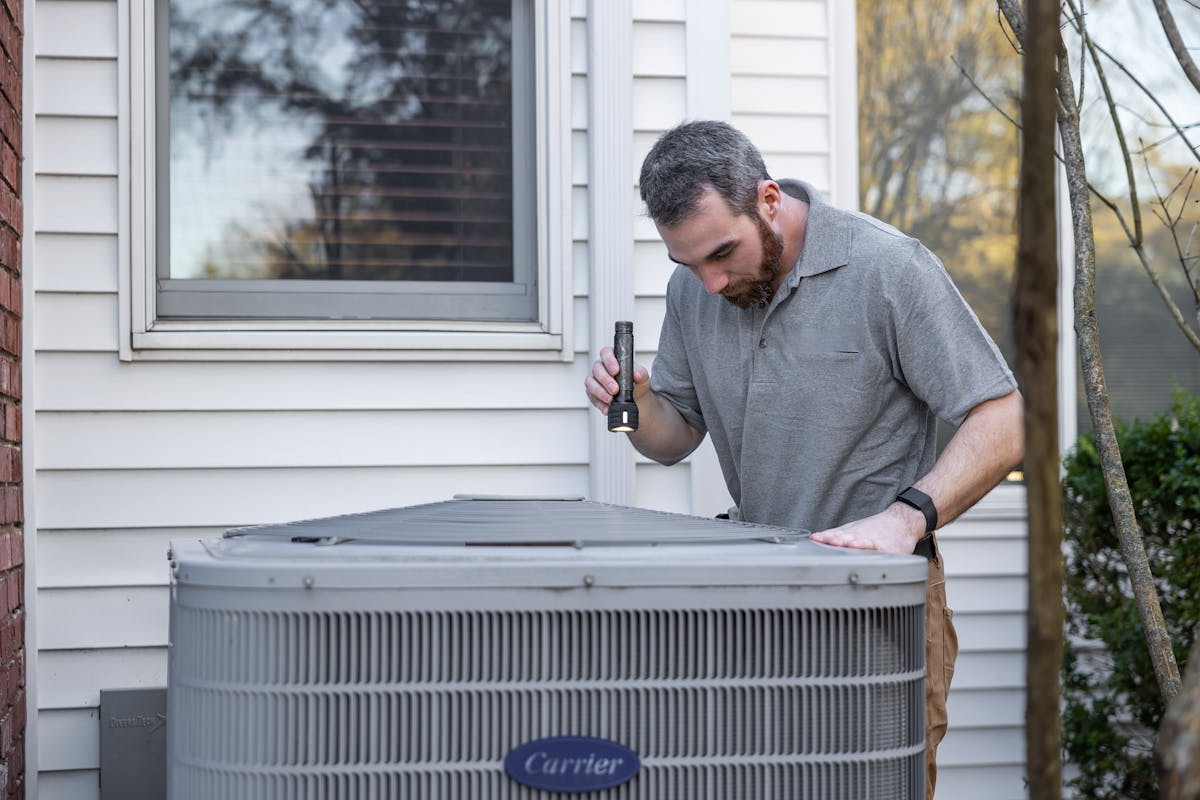
Homeowners can safely perform basic checks to identify efficiency losses before calling a technician. Always turn off power at the thermostat or service switch before inspecting equipment filters or outdoor cabinets. Check your air return vents to ensure filters are clean and unobstructed by furniture or draperies. Inspect the outdoor condenser unit to confirm that dry leaves, grass clippings, or dirt are not blocking the aluminum fins. Gently flush outdoor coils with a low-pressure garden hose if surface dust has accumulated. Inspect visible ductwork near your attic access hatch for obvious disconnections or damaged outer foil insulation. Check your thermostat batteries and programming settings to ensure the system is not locked in a continuous fan or override mode. Do not open electrical disconnect boxes, access high-voltage capacitors, or attempt to service refrigerant lines. High-voltage wiring poses severe electrocution risks, and handling pressurized refrigerant without proper certification violates environmental standards.
What a Licensed Professional Tests and Repairs
When basic checks do not resolve high electricity usage, a professional diagnostic inspection is required. Air conditioning contractors in Texas must hold a license through the Texas Department of Licensing and Regulation (TDLR) to perform mechanical repairs or handle refrigerant. A licensed technician measures system static pressure to check for internal airflow restrictions inside ductwork and coils. They test electrical components using an amp clamp to measure current draw on the compressor, outdoor fan motor, and indoor blower motor against manufacturer specifications. Technicians measure superheat and subcooling levels using digital gauges and temperature sensors to evaluate exact refrigerant levels. Thermal imaging cameras are also used to detect hidden attic duct leaks, missing insulation pockets, or hot air infiltration points along ceiling registers. Repairs may include replacing failed capacitors, repairing refrigerant line leaks, recharging system refrigerant, sealing damaged attic duct connections, or cleaning heavily fouled evaporator coils using specialized chemical rinses.
Repair Versus Replacement Considerations
If your cooling system requires frequent servicing or relies on obsolete refrigerant formulations, minor repairs may no longer prove cost-effective. Replacing an aging, low-efficiency system with a modern high-efficiency unit significantly reduces monthly summer kilowatt-hour consumption. When deciding between repair and replacement, evaluate the overall age of the equipment, the total cost of pending repairs, and system efficiency ratings. Older units lose operational efficiency over years of continuous summer service, driving up electricity usage even when operating without an outright mechanical failure. Key cost drivers for system repairs or replacements include the accessibility of the attic air handler, ductwork re-sizing requirements, electrical panel capacity updates, equipment tonnage, and the overall efficiency rating of the new condenser and coil combination. Regular seasonal maintenance helps prevent sudden power spikes. Replacing air filters consistently, keeping outdoor coils clear of debris, sealing attic accesses, and scheduling professional spring tune-ups ensure peak operating efficiency throughout the hottest months.
Common questions
Why does my AC run continuously during extreme summer heat?
When outdoor temperatures approach peak seasonal extremes, your cooling system reaches its maximum design capacity. If the heat entering your home matches the system's cooling output, the compressor runs continuously to maintain your indoor set temperature.
Can a dirty outdoor coil increase my electric bill?
Yes. Dust, dirt, and lawn debris coating the outdoor condenser fins prevent the unit from releasing absorbed heat outside. This forces the compressor to run longer and pull higher electrical current to cool your home.
How do foundation shifts affect my summer power bill?
Expansive clay soil contraction creates gaps around door frames, window openings, and wall joints. These gaps pull hot, humid outdoor air into living spaces, increasing the workload on your air conditioner.
Does setting my thermostat lower cool my home faster?
No. Air conditioners cool spaces at a fixed rate regardless of how low you set the thermostat. Setting the temperature extra low simply causes the system to run longer, consuming more electricity without cooling the room any faster.