
What Homeowners Can Check Before Calling for AC Repair
Short answer: Before calling a licensed air conditioning contractor, check basic operational controls that cause sudden system shutdowns. Verify thermostat settings and replace...
By Everyday Home Advice Editorial Team
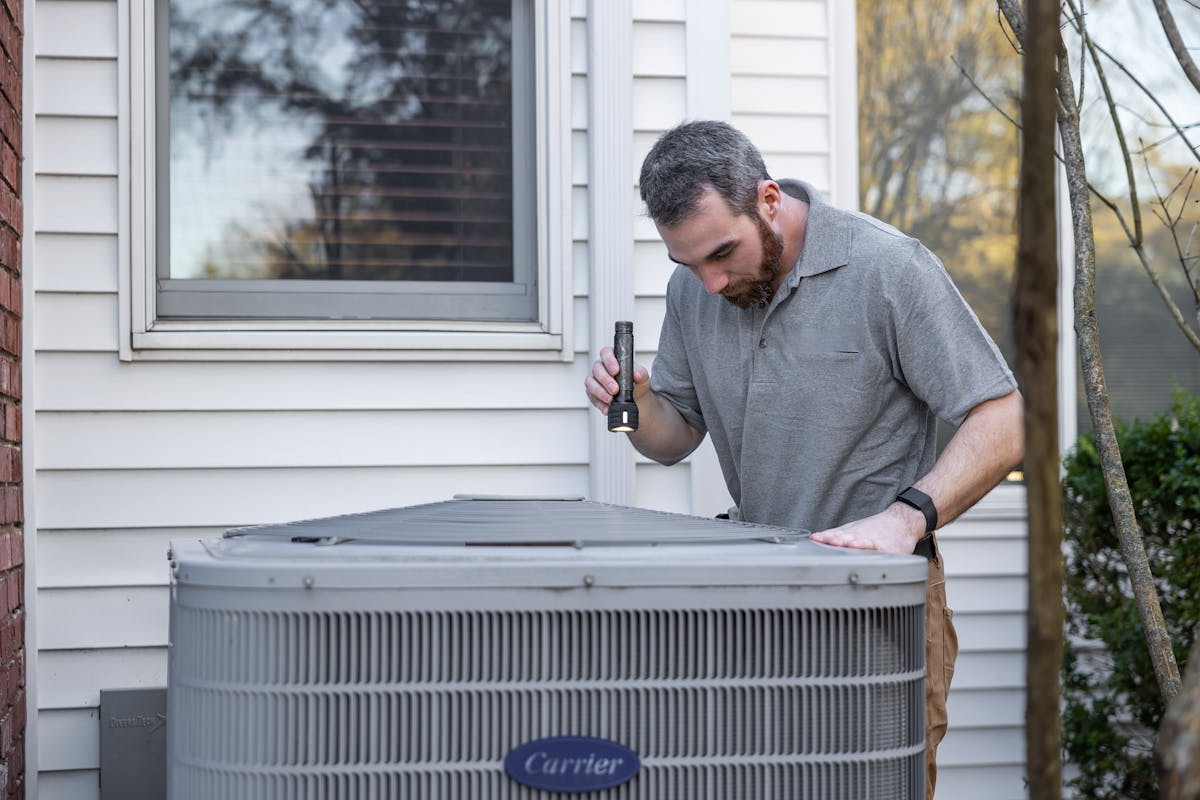
Short answer: Before calling a licensed air conditioning contractor, check basic operational controls that cause sudden system shutdowns. Verify thermostat settings and replace fresh batteries, inspect the return air filter for clogging, check circuit breakers at the main panel and outdoor disconnect switch, inspect the indoor secondary drain pan for standing water that trips float switches, and ensure supply vents and outdoor coils are unobstructed.
Safe Homeowner Troubleshooting Checks
When an air conditioner stops cooling or fails to turn on, several basic checks can resolve the issue without a service visit.
Thermostat Power and Settings
Confirm that the thermostat is set to cooling mode and that the target temperature is set lower than the current room temperature. If the thermostat display is blank or flickering, replace the internal batteries with new ones. Alkaline batteries inside digital thermostats often lose power, breaking the low-voltage control signal sent to the indoor and outdoor equipment.
Air Filter Condition and Return Airflow
A heavily clogged return air filter restricts airflow across the evaporator coil inside your air handler. Reduced airflow causes the coil temperature to drop below freezing, turning ambient moisture into ice and stopping cooling performance. Remove the air filter and hold it up to a light source. If light does not pass through, replace the filter immediately. Ensure return grilles in hallways or central living spaces are not blocked by furniture or curtains.
Circuit Breakers and Disconnect Switches
Cooling systems rely on two separate high-voltage electrical circuits. Check your home main breaker panel for tripped switches labeled for the air handler and the outdoor condenser unit. If a breaker switch has tripped to the middle position, push it fully to the off position before turning it back on. Next, check the outdoor disconnect box mounted on the wall near the condenser unit to ensure the pulled-fuse block or toggle switch is fully engaged.
Condensate Pan and Float Safety Switch
Central air conditioners remove substantial amounts of water vapor from the air during operation. This moisture collects in a primary drain pan under the evaporator coil and drains through a PVC pipe. If the drain line becomes clogged, water accumulates in a secondary drain pan. A safety float switch rises with the water level and cuts power to the system to prevent water damage to ceilings. Look inside your secondary drain pan or air handler closet for standing water.
Outdoor Condenser Unit Inspection
Check the perimeter of the outdoor cabinet for leaf accumulation, grass clippings, or overgrown landscaping. The condenser coil requires clearance on all sides to reject heat from your home. Look through the top grille when the unit is turned off to ensure no tree branches or debris are obstructing the fan blades from spinning freely.
Internal Register Position
Walk through the house to verify that supply registers in occupied rooms are fully open. Closing supply registers increases static pressure within ductwork, forcing air back into the system and reducing overall heat exchange efficiency.
High-Risk Components: What Not to Touch
Homeowners must avoid opening internal electrical panels or touching refrigeration components. Air conditioning systems carry dangerous high-voltage electrical current and high-pressure chemical lines. The metal electrical service panel on the outdoor condenser houses start and run capacitors. Capacitors store dangerous levels of electrical energy even after the main circuit breaker is switched off. Touching capacitor terminals can result in severe electrocution. Do not open the sheet metal cabinet of the indoor air handler or furnace. Internal blower motors and high-voltage wiring terminals present electrical hazards, and improper reassembly can cause air leaks or improper system sequence. Refrigerant lines, service ports, and Schrader valves must only be handled by certified technicians. Refrigerant is pressurized under extreme force, and accidental release can cause frostbite, blindness, or illegal release of EPA-regulated chemicals into the atmosphere.
What to Record for Your HVAC Technician
If basic checks do not resolve the issue, gathering technical observations helps your technician locate the problem efficiently during a service call. Record the following information:
- Current indoor ambient temperature versus the thermostat target setpoint.
- Specific times of day when cooling performance drops or fails completely.
- Any unusual noises coming from the equipment, such as metallic screeching, rapid clicking, or continuous electrical buzzing.
- Odors originating from supply vents, including sour musty smells or burnt electrical odors.
- System history, including recent filter changes, land grading work near the outdoor pad, or recent power outages.
Dallas–Fort Worth Climate and Installation Factors
North Texas weather conditions create specific stresses on residential air conditioning equipment. Most homes in the region feature air handlers located in unconditioned attic spaces. Summer attic temperatures regularly reach extreme levels, placing extraordinary thermal stress on insulation, electrical relays, and condensate drainage systems. High indoor humidity during spring and summer months causes condensate drain lines to produce heavy volume, accelerating algae and slime growth that triggers safety float switches. Soil composition in North Texas consists largely of expansive clay that expands when wet and contracts during dry weather. Foundation movement caused by shifting clay soil can tilt the concrete or composite pad supporting your outdoor condenser unit. Unlevel pads place structural strain on connected copper line sets, leading to micro-cracks and refrigerant leaks over time. Spring thunderstorms in the region often bring hail, which can bend delicate aluminum fins on the outdoor condenser coil and restrict vital airflow. Hard municipal water sprayed from lawn sprinklers onto condenser coils leaves mineral scale deposits that block heat dissipation and corrode copper tubing.
Professional Diagnosis, Cost Drivers, and Repair vs. Replace
Air conditioning contractors in Texas must hold a Class A or Class B license issued by the Texas Department of Licensing and Regulation (TDLR). General home improvement contractors are not licensed statewide for HVAC work, so verify credentials before authorizing repairs.
Professional Testing Procedures
A licensed technician performs advanced diagnostic procedures beyond basic homeowner checks:
- Measuring operating electrical current and voltage draw across capacitors and compressors using specialized meters.
- Checking refrigerant pressures and subcooling or superheat values to verify correct refrigerant charge.
- Testing indoor airflow and temperature split across the evaporator coil to assess heat transfer rate.
- Inspecting secondary drain lines, trap depth, and condensate pump operation.
Factors That Drive Repair Costs
Repair costs depend on component accessibility, system age, and part complexity. Air handlers located in tight attic spaces with high ambient temperatures require more labor time to service. Older systems using phased-out refrigerants cost significantly more to recharge than systems using modern fluids. Replacing major sealed components, like compressors or evaporator coils, involves complex recovery, soldering, and evacuation processes compared to swapping electrical relays or capacitors.
Repair versus Replacement Guidelines
If a system requires frequent refrigerant top-offs or has a cracked compressor, replacement is often more practical than continuous repairs. Units past their normal service life facing major component failures generally warrant replacement, especially when upgrading improves electrical efficiency under severe North Texas summer cooling loads.
Common questions
Why is my outdoor AC unit fan running, but the air coming out of indoor vents is warm?
Warm airflow usually indicates that the indoor blower is running while the compressor or outdoor fan is not operating correctly, or that the system has lost its refrigerant charge. Check your outdoor unit to see if both the fan blades and the compressor are active. If the outdoor unit runs continuously without cooling, turn off the system at the thermostat to prevent mechanical damage to the compressor.
What should I do if I see ice on the copper pipes connected to my air handler?
Turn the system mode from Cool to Off immediately, and switch the thermostat fan setting from Auto to On. Ice formation on suction lines indicates restricted airflow from a clogged filter or a refrigerant leak. Running the fan melts the ice from the indoor coil, allowing a licensed technician to perform an accurate leak test and system diagnostic upon arrival.
Why does my AC breaker trip again immediately after I reset it?
A breaker that trips instantly upon resetting indicates a hard electrical short circuit, a grounded compressor, or a failed capacitor. Do not attempt to reset the breaker a second time, as repeated attempts can cause severe electrical arc damage or start an electrical fire. Leave the breaker off and schedule a service call with a licensed HVAC professional.
Can I clear a clogged condensate drain line myself?
Homeowners can clear minor algae clogs by pouring household white vinegar down the primary condensate drain access point near the attic unit. If the drain pan is filled with standing water and the safety float switch has activated, use a wet-dry vacuum on the outdoor discharge point to pull the clog through. Avoid using caustic chemical drain cleaners, which corrode PVC fittings and metal drain pans.