
Why Is My AC Running but Not Cooling?
Short answer: When an air conditioner runs continuously without cooling, the indoor fan is blowing air, but the system is failing to absorb or transfer heat. This issue...
By Everyday Home Advice Editorial Team
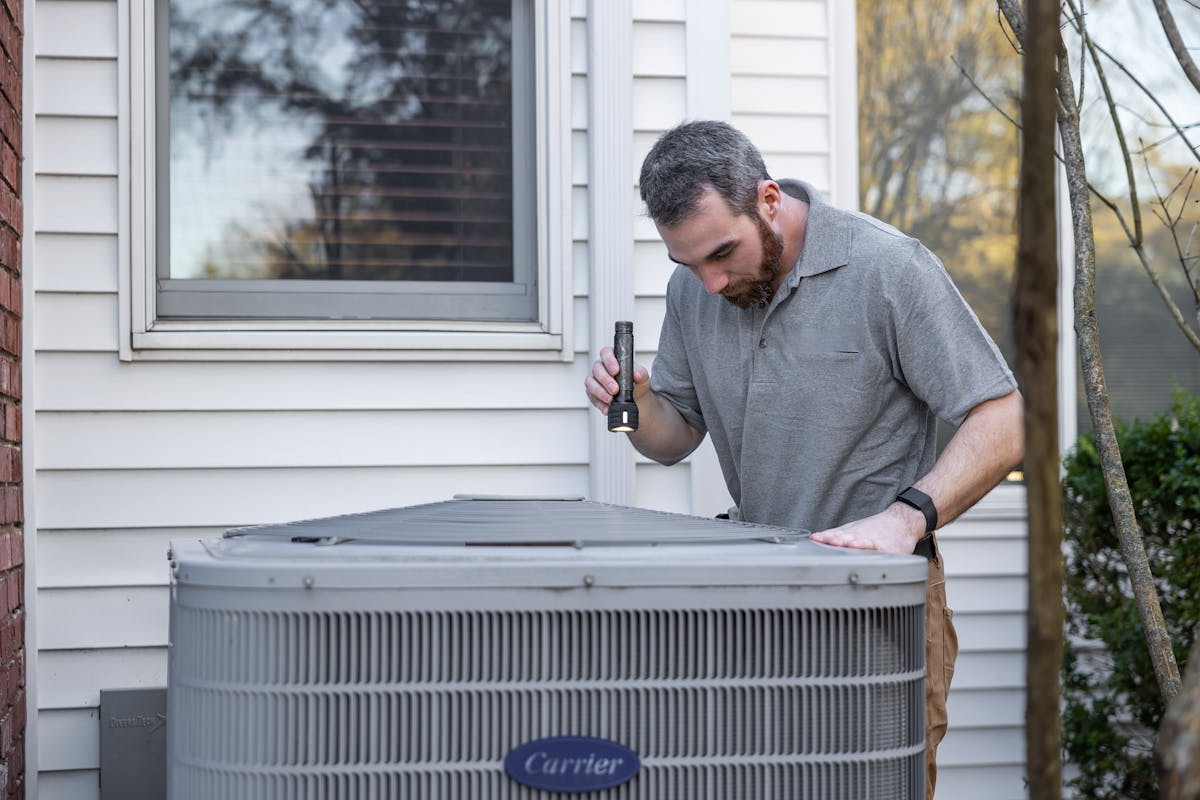
Short answer: When an air conditioner runs continuously without cooling, the indoor fan is blowing air, but the system is failing to absorb or transfer heat. This issue typically stems from restricted airflow, low refrigerant levels, a failed outdoor compressor or fan motor, an electrical failure like a bad capacitor, or a tripped condensate safety switch.
Diagnosing symptoms when an air conditioner runs warm
Observing how your system behaves inside and outside the house helps narrow down the underlying mechanical or airflow issue.
Room temperature air with the outdoor unit running
If air blows at room temperature while the outdoor fan and compressor operate, the issue often involves restricted airflow or a refrigerant leak. A clogged air filter prevents adequate heat absorption across the indoor coil. If airflow is clear, a leak causing low refrigerant prevents the system from removing indoor heat.
Room temperature air with a silent outdoor unit
When the indoor blower operates but the outdoor condenser remains off, power is not reaching the outdoor components or a safety control has tripped. A bad dual-run capacitor, a failed contactor, a tripped breaker, or a clogged condensate line tripping a float switch can shut down the outdoor unit.
Cooling briefly before blowing warm air
If the system cools initially but gradually turns warm, the evaporator coil may be icing over. Restrictive filters, closed supply vents, or low refrigerant drop coil temperatures below freezing. Moisture freezes on the coil, blocking airflow until the system is turned off to thaw.
Warm air only during peak afternoon hours
If the system cools effectively overnight and in the morning but loses ground during peak afternoon heat, the air conditioner may be at its capacity limit or suffering from severe heat gain in ductwork.
Risks of running a failing system
Running an air conditioner continuously without cooling can cause severe equipment damage. Refrigerant carries oil that lubricates the compressor. Operating a system with low refrigerant starves the compressor of oil, leading to overheating and mechanical failure. Ice buildup on the indoor coil also risks property damage. As ice thaws, water can overflow the drain pan. If secondary drain lines fail, water can leak through ceiling drywall, insulation, and flooring.
Safe checks homeowners can perform
Homeowners can safely inspect several basic components before calling a technician: Thermostat settings: Confirm the thermostat is set to COOL and the setpoint is below room temperature. Ensure the fan setting is on AUTO rather than ON. Air filter: Inspect the return air filter and replace it immediately if dirty. Vents and returns: Confirm supply registers and return grilles are open and unobstructed. Condensate float switch: Check the drain pan near the indoor unit. Standing water in the pan indicates a tripped float switch. * Outdoor unit: Inspect the outdoor condenser for leaf buildup or grass clippings blocking the fins, and verify the outdoor circuit breaker has not tripped.
What to leave to a licensed professional
Safety risks and state regulations require professional handling for mechanical and electrical components: Electrical controls: Never open high-voltage panels on the outdoor unit or air handler. Capacitors store dangerous electrical charges even when power is turned off. Refrigerant handling: Federal law and state regulations prohibit unlicensed individuals from handling refrigerants. Adding refrigerant without repairing the underlying leak will not fix the issue. * Breaker resets: Do not repeatedly reset a circuit breaker that trips. Repeated resets can cause electrical fires or destroy motor windings.
What a technician tests during a service call
A licensed technician performs systematic diagnostics to identify the root cause: Electrical components: Testing capacitors with a multimeter, checking contactor points, and measuring current draw on motors. Refrigerant pressures: Attaching manifold gauges to measure pressures and calculating superheat or subcooling to locate leaks or restrictions. Airflow static pressure: Measuring pressure across the air handler to evaluate blower performance and ductwork resistance. Temperature split: Measuring the temperature difference between return air entering the coil and supply air exiting the registers.
Repair options, replacement decisions, and cost drivers
Repairs range from minor component replacements to major system overhauls. Common repairs include replacing capacitors, contactors, secondary float switches, or clearing clogged condensate lines. Major repairs involve replacing evaporator coils, fan motors, or compressors. System age and condition dictate whether to repair or replace. When an older system suffers a major compressor or coil failure, replacement is often more practical than paying for extensive repairs on aging equipment. Repair costs are driven by component complexity, labor hours, refrigerant type, and unit accessibility. In Texas, air conditioning contractors must be licensed through the Texas Department of Licensing and Regulation (TDLR).
How North Texas summer conditions impact performance
Dallas-Fort Worth homes present specific operating challenges for cooling equipment: Attic air handlers: Most local homes house the air handler and ductwork in the attic, where summer temperatures frequently exceed 140 degrees. Uninsulated or leaking ductwork picks up heat, reducing cooling output before air reaches living areas. High condensate volume: Continuous operation in humid conditions generates large amounts of water on the indoor coil. High humidity promotes algae growth inside drain lines, frequently clogging pipes and tripping safety switches. * Outdoor environmental factors: Severe hail storms can dent soft aluminum condenser fins, restricting airflow. Expansive clay soils shift outdoor concrete pads, putting mechanical strain on copper refrigerant lines over time.
Common questions
Should I turn off my AC if it is blowing warm air?
Yes. Turn the thermostat to OFF. Running a failing air conditioner continuously can burn out the compressor or cause frozen coils to thaw and damage surrounding drywall.
Why does my AC cool fine at night but warm up during the day?
Extreme attic heat gain, dirty coils, low refrigerant, or insufficient system capacity can allow an AC to keep up overnight when outdoor temperatures drop, but fail when afternoon heat peaks.
Can a dirty air filter cause my AC to stop cooling completely?
Yes. A clogged filter severely restricts airflow over the evaporator coil. This restriction causes coil temperatures to drop below freezing, leading to ice buildup that blocks cooling.
Who regulates HVAC contractors in Texas?
Air conditioning contractors in Texas are licensed through the Texas Department of Licensing and Regulation (TDLR), which enforces technical standards and insurance requirements. General contractors, by contrast, are not licensed at the state level.