
Why Is My AC Running Constantly?
Short answer: An air conditioner that runs non-stop is either struggling against extreme heat gain entering the home or failing to transfer heat effectively due to an equipment...
By Everyday Home Advice Editorial Team
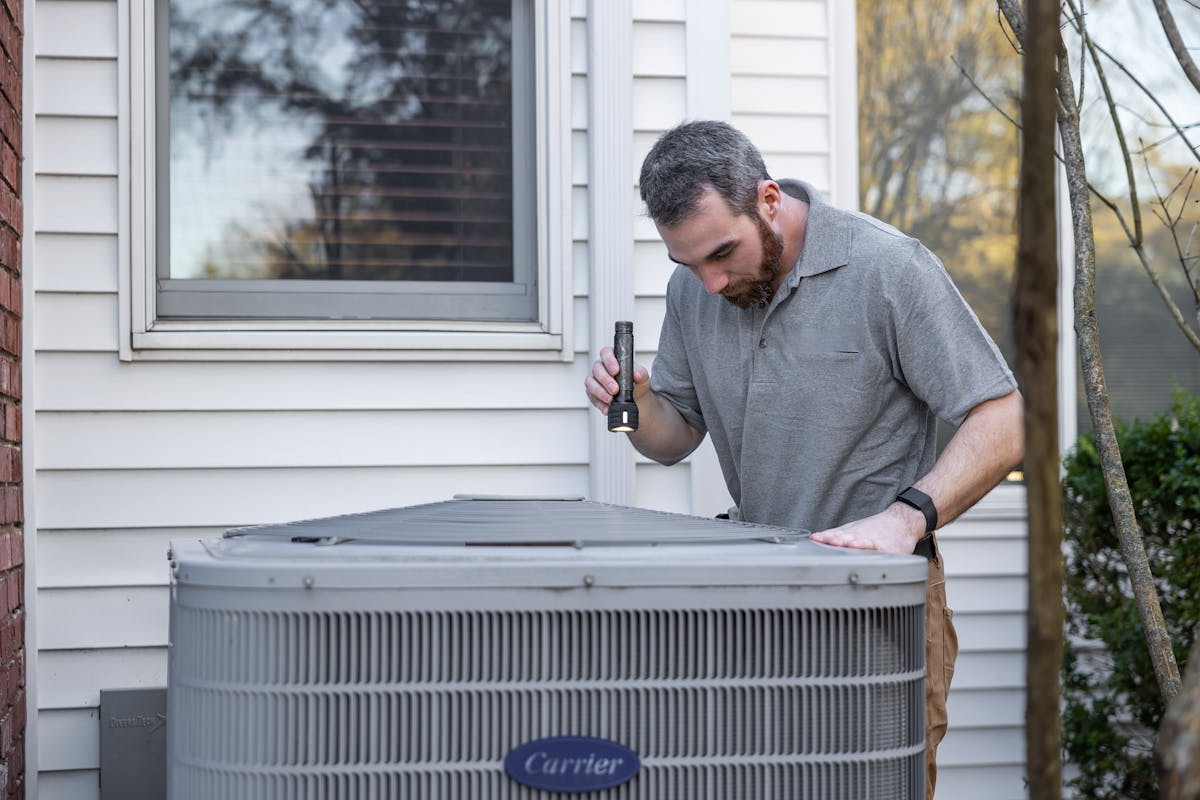
Short answer: An air conditioner that runs non-stop is either struggling against extreme heat gain entering the home or failing to transfer heat effectively due to an equipment fault. Simple issues like a clogged air filter or incorrect thermostat settings can force continuous operation, as can serious technical problems such as refrigerant leaks, failing motor capacitors, dirty coils, or disconnected ductwork in the attic.
Identifying non-stop air conditioner operation
When an air conditioner operates continuously, the outdoor compressor and indoor blower fan run without cycling off, but the indoor air temperature often remains above the thermostat setpoint. During extreme heat, long run times can occur as equipment works to keep up with ambient thermal loads. However, a system that never reaches its target temperature, or satisfies the setpoint only long after dark, indicates a functional problem rather than routine cooling. Ignoring a system that runs without stopping can lead to severe mechanical damage and excessive energy bills. Continuous running accelerates physical wear on fan motors and the compressor pump. Furthermore, severe airflow or refrigerant issues can cause the indoor evaporator coil to freeze into a solid block of ice. If liquid refrigerant travels back down the suction line into the compressor because the frozen coil failed to evaporate it, the compressor can suffer fatal mechanical damage.
Airflow, mechanical, and load causes
Constant cooling operation stems from restricted airflow, low refrigerant charge, electrical component degradation, or severe duct loss. Differentiating between these issues helps determine whether a basic maintenance task or a professional service call is necessary.
Airflow restrictions and dirty coils
Airflow restrictions prevent the HVAC system from moving heat out of living spaces. A dirty or clogged return air filter starves the system of air volume, drastically reducing cooling output. Similarly, an indoor evaporator coil coated in dust cannot absorb heat efficiently, while outdoor condenser coils covered in dirt, yard debris, or cottonwood seeds cannot discharge heat outside. Both conditions force the system to run continuously while cooling performance drops.
Refrigerant leaks and electrical wear
Refrigerant circulates through closed lines to move heat outdoors. When a leak develops in copper lines or coil joints, lower refrigerant levels drop system capacity. The compressor runs endlessly because it lacks sufficient refrigerant density to pull heat from the indoor air. Additionally, a degraded run capacitor or a weakening blower motor fan can cause reduced motor speeds, lowering system efficiency and lengthening run times.
Duct disconnects and system sizing
Leaking or disconnected air ducts lose conditioned air before it reaches living spaces. If a supply duct splits or detaches, cold air escapes into unconditioned areas while the living area remains warm. Furthermore, if return ducts pull hot air from structural cavities or unconditioned spaces, the system struggles to pull room temperatures down. An undersized unit that was not calculated for the home's thermal load will also run non-stop during high-temperature conditions.
DFW climate heat gain and attic factors
Air conditioning equipment in Dallas-Fort Worth faces extreme design conditions during summer months when ambient temperatures regularly exceed triple digits. Most DFW homes feature indoor air handlers and flex-duct networks installed directly inside unconditioned attic spaces. During peak summer afternoons, radiant heat from roof decking can drive attic temperatures far above outdoor ambient levels, placing intense thermal stress on air handlers and duct runs. If duct insulation has degraded or attic insulation levels are insufficient, cool air moving through the attic ducts absorbs substantial heat gain before reaching room supply registers. Additionally, expansive clay soil throughout the DFW metroplex shifts significantly as moisture levels change during prolonged dry periods. Soil movement shifts home foundations and framing, which can pull flexible duct connections loose from ceiling plenums or air handler collars. High summer humidity also taxes system capacity, forcing equipment to remove heavy latent moisture before indoor air temperatures can drop.
Safe homeowner checks before calling for service
Homeowners can safely check several external components to rule out operational mistakes before requesting professional diagnostics. Inspect thermostat settings: Verify that the system is switched to cool and the fan setting is set to "auto" rather than "on". Setting the fan switch to "on" keeps the indoor blower running continuously even after the cooling circuit has turned off. Check the air filter: Remove the air filter and inspect it against a light source. Replace dirty or blocked filters with a new filter sized correctly for the cabinet. Inspect vents and registers: Ensure return air grills inside the home are unobstructed by rugs, furniture, or drapes. Confirm that supply registers in all rooms are fully open. Inspect the outdoor unit: Ensure at least two feet of clear space exists around the outdoor condenser cabinet. Clear away leaves, grass clippings, and brush. Shut off electrical power at the outdoor disconnect box before using a garden hose to gently rinse light dirt off the condenser fins from top to bottom. * Check the breaker box: Verify that circuit breakers assigned to the indoor air handler and outdoor compressor unit have not tripped inside the electrical panel.
Tasks that require a licensed professional
Certain diagnostic steps present high electrical and pressure hazards and must be handled by trained technicians. Homeowners should never open internal electrical panels on outdoor units or indoor air handlers. Run capacitors hold high electrical voltage charges even when main power switches are turned off. Refrigerant systems are pressurized closed loops containing chemical refrigerants. Attempting to attach pressure gauges, manipulate service valves, or add refrigerant without proper training and tools can cause severe freeze burns, ruin the compressor, and violate environmental safety laws. In Texas, air conditioning technicians and contractors are licensed through the Texas Department of Licensing and Regulation (TDLR). Always ensure any contractor opening cabinet panels or testing internal components holds an active TDLR license.
Professional diagnostics and repair decisions
When diagnosing a non-stop cooling cycle, a licensed HVAC technician performs systematic electrical, pressure, and airflow testing. Technicians measure compressor and fan motor operating amp draw, test capacitor microfarads against rated tolerances, and calculate static pressure across the air handler to evaluate airflow resistance. To check refrigerant levels accurately, technicians attach digital manifold gauges and pipe thermistors to calculate subcooling and superheat levels. If refrigerant is low, technicians locate leaks using electronic leak detectors or fluorescent dyes before making repairs and recharging the circuit. When deciding whether to repair or replace equipment that runs constantly: If the system uses obsolete refrigerants such as R-22, major refrigerant leak repairs or compressor replacements are rarely economical compared to replacing the system. If a major component like the compressor or evaporator coil fails on a system past its manufacturer warranty period, system replacement is often the more practical choice. * If the problem is caused by a failing capacitor, a clogged condensate line, a blown fan motor, or a loose duct joint on a newer system, localized component repair is the appropriate solution.
Factors that drive cooling repair and replacement costs
HVAC repair and replacement costs vary based on specific mechanical and structural variables rather than flat component pricing. System accessibility: Air handlers located in tight, low-clearance attic spaces require more labor time and technician effort to service or replace than units installed in accessible utility closets. Refrigerant type: Restocking older, phased-out refrigerants carries significantly higher material costs per pound during a recharge compared to modern standard refrigerants. Failure complexity: Replacing a simple run capacitor involves basic electrical service, whereas replacing a burnt-out compressor or frozen evaporator coil requires recovering refrigerant, brazing line joints, pulling a deep vacuum, and recharging the system. Scope of duct repairs: Repairing or replacing damaged flex ductwork in an attic depends on the length of duct runs requiring replacement and accessibility above ceiling joists.
Common questions
Is it normal for an AC to run all day in summer heat? During intense summer heat in the DFW area, an air conditioner may run almost continuously during late afternoon peak temperatures. However, the system should still maintain setpoint temperatures and turn off once outdoor temperatures cool down in the evening. Can a dirty air filter cause an air conditioner to run constantly? Yes. A clogged filter blocks airflow over the evaporator coil, severely limiting heat absorption. The system will run without stopping while blowing weak, insufficiently cooled air, which can eventually cause the indoor coil to freeze. Why is my AC running constantly but not dropping the temperature? This symptom usually indicates a low refrigerant charge from a leak, a failed run capacitor preventing full compressor operation, dirty coils, or a disconnected duct pulling hot air from the attic directly into living spaces. Will continuous running ruin my compressor? Running without stopping increases mechanical wear and electrical costs. If the continuous operation is caused by a dirty coil or low refrigerant, it can cause liquid refrigerant to enter the compressor or cause motor windings to overheat, leading to catastrophic compressor failure.