
Why Is My Upstairs AC Not Cooling in a Two-Story North Texas Home?
Short answer: An upstairs area that stays hot while the downstairs cools usually stems from heat rising, ductwork heat gain in unconditioned North Texas attics, airflow...
By Everyday Home Advice Editorial Team
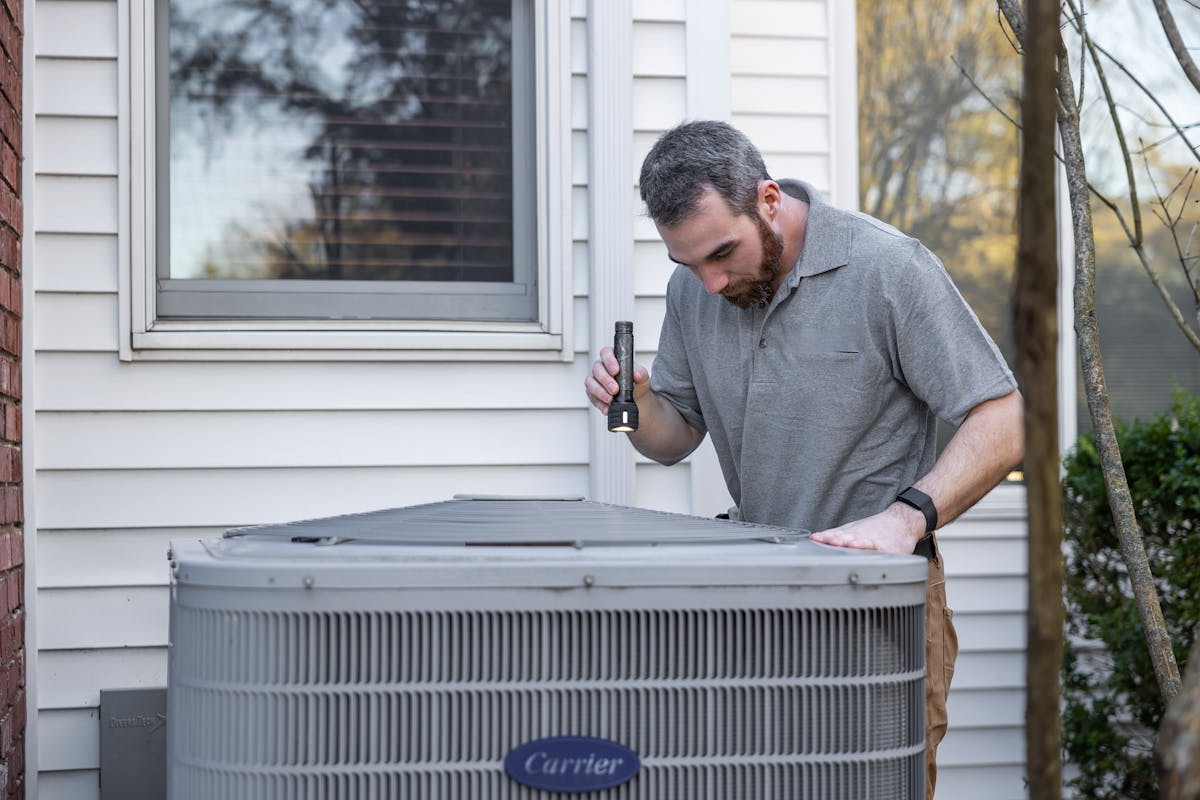
Short answer: An upstairs area that stays hot while the downstairs cools usually stems from heat rising, ductwork heat gain in unconditioned North Texas attics, airflow restrictions, or improper system balancing rather than an undersized cooling unit. Closing upstairs supply vents often worsens the issue by increasing duct static pressure and forcing cool air out through duct joints.
Key distinctions to check first
Before assuming your air conditioner is broken or undersized, observe how the system operates across both levels of your home. A difference in temperature between stories is standard due to natural thermal movement, but extreme comfort gaps signal an airflow or duct distribution issue.
| Symptom | Likely Cause | Initial Action |
|---|---|---|
| Downstairs reaches target temperature, but upstairs feels warm and humid | Thermal stratification and heat gain through attic ductwork | Set thermostat fan to ON; ensure upstairs return vents are clear |
| Weak airflow from all upstairs supply registers | High static pressure, crushed flex duct, or loose duct connection in attic | Check air filter; schedule a duct inspection |
| System runs continuously without cooling either floor | Frozen evaporator coil, low refrigerant, or mechanical failure | Turn system off to prevent compressor damage; call a licensed technician |
| Upstairs is hot while air blowing from vents feels cold | Insufficient air volume or lack of upstairs return pathways | Balance supply dampers or consider zoning solutions |
Detailed causes of upstairs cooling failures
Two-story homes in North Texas communities like Frisco, Prosper, and McKinney present unique cooling challenges due to regional building designs and climate conditions.
Natural heat elevation and thermal movement
Warm air naturally rises while dense, cool air settles on the lower floor. In a open-concept two-story floor plan, heat continuously migrates upward. Without adequate return air capacity upstairs to pull warm air back to the air handler, hot air becomes trapped against upper-level ceilings.
Unconditioned attic heat gain
In Collin County residential construction, ductwork for the second floor typically runs through unconditioned attic space. During North Texas summer heat waves, attic space temperatures soar far higher than the outdoor ambient air. Flex ducts sitting in this space absorb severe heat. Cool air moving through the duct system warms up before it ever reaches upper-story bedrooms.
Ductwork sizing and static pressure problems
Single-system HVAC configurations rely on one central air handler to distribute air to both levels. If ductwork runs to the upper level are long, contain sharp bends, or lack sufficient return pathways, air takes the path of least resistance and dumps primarily into lower-level rooms.
Incorrect vent settings
Closing supply vents in unused upstairs rooms is a mistake many homeowners make. Closing registers increases static pressure inside the duct system. High static pressure reduces overall airflow, can cause the evaporator coil to freeze, and forces air out through tiny leaks in duct seams located in the hot attic.
Safe homeowner checks to perform
You can perform several safe, non-invasive troubleshooting steps without opening equipment cabinets or entering dangerous spaces.
- Inspect air filters: A dirty or overly restrictive air filter reduces airflow throughout the home. Replace air filters according to manufacturer guidelines, choosing a rating that allows proper airflow.
- Switch the thermostat fan setting: Change the thermostat fan setting from AUTO to ON. Running the fan continuously keeps air circulating between the upper and lower floors, blending air temperatures even when the compressor is off.
- Verify register positions: Walk through the upper level to ensure all supply registers and return grilles are open and unobstructed by furniture, drapes, or rugs.
- Compare air delivery: Hold a hand near upstairs registers to check if airflow feels noticeably weaker than airflow from downstairs registers.
What you should never touch yourself
Cooling systems operate under high electrical voltage and contain pressurized refrigerant gas. In North Texas summer months, attic temperatures pose severe heat-exhaustion risks within minutes.
- Attic entry during peak sun: Avoid crawling into unconditioned attics during hot summer afternoons to inspect ductwork.
- Refrigerant lines and valves: Never attempt to inspect, tighten, or connect gauges to copper refrigerant lines. Handling refrigerant requires environmental certification and specialized tools.
- Electrical components: Do not open the electrical service panel, air handler cabinet, or outdoor condenser disconnect switch. High voltage remains present even when the thermostat is off.
- Ductwork alterations: Do not attempt to cut into metal plenums or alter flexible duct connections without professional air-balancing tools.
In Texas, air conditioning contractors must hold a license through the Texas Department of Licensing and Regulation (TDLR) to perform diagnostic, electrical, and refrigerant repairs.
What a licensed professional tests
When a licensed HVAC technician evaluates a two-story cooling imbalance, they conduct thorough diagnostic procedures to pinpoint the root cause without making assumptions.
- Static pressure testing: The technician measures total external static pressure in the supply and return plenums to determine if ductwork is undersized or restricted.
- Airflow measurement (CFM): Using a flow hood or anemometer, the technician measures the cubic feet per minute of air exiting each register to verify balanced distribution.
- Temperature drop (Delta T): The technician measures the temperature difference between return air entering the system and supply air leaving the evaporator coil to confirm proper refrigerant charge and heat absorption.
- Manual J load calculation: If equipment capacity is suspected, the technician performs an industry-standard heat gain calculation considering square footage, window exposure, insulation values, and local weather design conditions before recommending system upgrades.
Repair options and what drives repair costs
Resolving second-story cooling issues ranges from minor airflow adjustments to system reconfigurations.
Air balancing and manual dampers
Installing or adjusting manual inline dampers within the attic ductwork allows a technician to restrict airflow slightly to the downstairs while directing greater air volume to the second floor.
Air sealing and duct repair
Sealing leaky duct joints with mastic and re-insulating flexible ductwork prevents cool air from escaping into the hot attic space.
Adding return air capacity
Installing additional return air grilles upstairs creates a dedicated pathway for hot air to move back to the central air handler, eliminating air stagnation.
Motorized zoning systems
Retrofitting a single system with motorized dampers, a bypass duct, and multiple thermostats allows independent temperature control for each floor.
Cost drivers
Primary factors influencing repair scope include:
- Accessibility of attic ductwork and indoor air handlers.
- Complexity of existing duct design and whether new duct runs must be added through interior walls.
- The age and compatibility of current blowers and air handlers with zoning controls.
Repair versus replacement for North Texas homes
If your current system delivers cold air but cannot maintain comfort upstairs, modifying ductwork or adding a zoning system often resolves the issue without replacing functional equipment. However, if your system uses older refrigerant, requires frequent mechanical repairs, or fails a professional Manual J load calculation, replacing the system may be necessary. In two-story Collin County homes, installing two independent cooling systems or a multi-zone system with a variable-speed compressor provides far superior humidity control and floor-by-floor temperature management during intense summer heat.
Preventing upstairs temperature imbalances
Proactive home maintenance helps maintain balance between floors throughout hot North Texas summers.
- Maintain attic insulation: Ensure attic insulation meets recommended depth standards to block radiant heat from penetrating second-story ceilings.
- Utilize window coverings: Keep solar screens, blinds, or drapes closed on west- and south-facing upstairs windows during peak sun hours.
- Schedule seasonal maintenance: Have a licensed technician inspect blower motors, clean coils, and verify refrigerant charge every spring.
- Adjust registers seasonally: Partially reduce downstairs airflow during summer months while opening upstairs registers completely to force cool air upward.
Common questions
Should I set my thermostat fan to ON instead of AUTO?
Yes. Setting the fan to ON keeps the blower running continuously, mixing air between your first and second floors even when the cooling cycle pauses. This helps smooth out temperature variations.
Why did closing upstairs vents make my upper floor warmer?
Closing vents increases pressure within your ductwork, forcing air out through small duct leaks in the hot attic and reducing overall system airflow. This lower airflow can cause the system to short-cycle or freeze up.
How do I know if my AC is undersized for my home?
You cannot determine if a system is undersized based on temperature differences alone. A licensed technician must perform a formal Manual J load calculation to evaluate insulation, window square footage, ceiling heights, and home orientation.
Can a single AC system adequately cool a two-story home in Frisco or Prosper?
A single system can cool a two-story home effectively if the duct system is designed correctly, properly insulated, equipped with return vents on both levels, and well-balanced. However, homes with large open foyers or high ceilings often benefit significantly from motorized zoning or separate units.
Sources
- U.S. Department of Energy: https://www.energy.gov/energysaver
- Texas Department of Licensing and Regulation: https://www.tdlr.texas.gov/
- National Weather Service Fort Worth: https://www.weather.gov/fwd/