
When Should You Call an Electrician?
Short answer: Call a licensed electrician immediately if you notice a burning smell, scorch marks, warm switches or outlets, electrical shocks, persistent circuit breaker...
By Everyday Home Advice Editorial Team
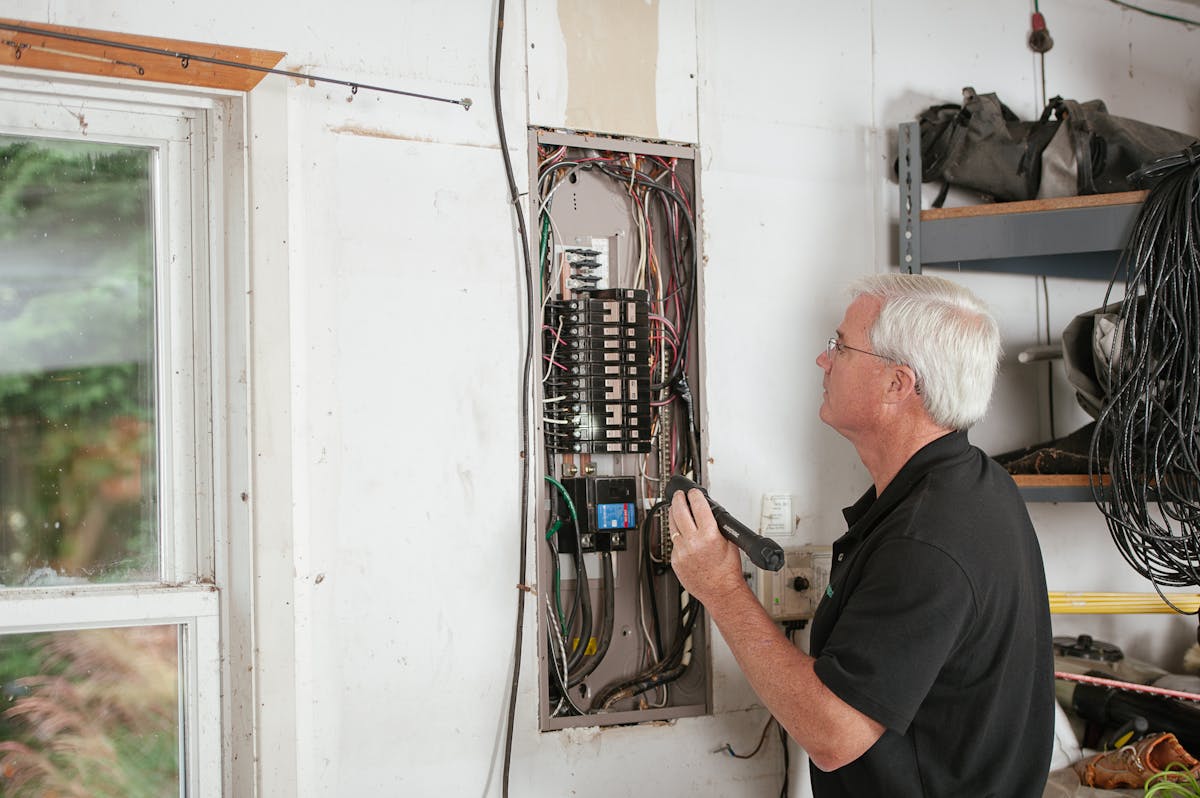
Short answer: Call a licensed electrician immediately if you notice a burning smell, scorch marks, warm switches or outlets, electrical shocks, persistent circuit breaker trips, or partial power loss across your home. You should also hire an electrician for planned improvements, such as installing an EV charger, adding heavy appliance circuits, upgrading an outdated main panel, or replacing old two-prong outlets.
Urgent Electrical Emergency Symptoms
Electrical hazards can develop quietly behind walls, inside junction boxes, or within the main service panel. Certain symptoms indicate active arcing, severe overheating, or ground faults that create immediate fire or shock risks. Contact a professional immediately if you observe any of the following emergency indicators:
- A burning plastic, chemical, or fishy smell originating from outlets, light fixtures, or the main breaker panel.
- Scorch marks, discoloration, or melting plastic on wall switches, receptacle faceplates, or breaker handles.
- Electric shocks or mild tingling sensations when touching metal appliance housings, switch plates, or metal plumbing fixtures.
- A main breaker or individual branch circuit breaker that trips immediately upon resetting or feels hot to the touch.
- Visible sparks emitting from an outlet, switch, or panel when plugging in or operating a device.
- Water entering the breaker panel, electrical outlets, or ceiling light fixtures following a roof leak or plumbing failure.
- Partial power loss where half of the branch circuits in your home lose power while others remain functional, which often points to a dropped utility leg or damaged main feed line.
Root Causes Behind Home Electrical Failures
Electrical issues stem from several distinct physical and mechanical factors. Understanding the underlying cause helps determine whether a problem requires a simple device replacement or an extensive service overhaul.
- Circuit overloading: Plugs and switches draw more current than the circuit wiring can safely carry. When too many high-wattage devices operate simultaneously, the breaker trips to prevent wire insulation from melting.
- Loose or degraded wire terminations: Screw terminals on switches and outlets can loosen over time due to thermal expansion and contraction cycles. Loose connections increase electrical resistance, generating localized heat and dangerous arcing.
- Outdated panel capacity or worn equipment: Older electrical panels may lack the total amperage capacity required by modern homes. Internal breaker contacts can also wear out, causing breakers to fail to trip during an overload or trip under normal electrical loads.
- Physical insulation damage: Rodents in attics, accidental nail punctures during home projects, or severe weather events can damage outer cable sheaths, leading to short circuits or ground faults.
Safe Homeowner Inspections Versus High-Risk Hazards
Homeowners can safely perform basic visual checks, but touching live internal components poses serious risk of severe electrical shock or electrocution.
What You Can Safely Check
You can inspect faceplates for physical cracks or discoloration without removing them from the wall. If a circuit turns off, you can attempt to reset a tripped circuit breaker once by pushing the handle firmly to the OFF position before flipping it back to ON. You can press the TEST and RESET buttons on ground fault circuit interrupter (GFCI) receptacles to verify proper mechanical trip function. You can also unplug high-wattage appliances from a tripping circuit to see if the load was the primary issue.
What You Must Never Touch
Never remove the dead-front cover panel of your main breaker box or subpanel. The main lug terminals remain energized even when the main switch handle is turned off. Do not stick metal tools, testers, or fingers into exposed wall outlets or open junction boxes. Never attempt to bypass a fuse, install a higher-ampere breaker on undersized wiring, or strip live wire insulation. If standing water surrounds or fills the main panel, stay far back and contact your utility provider or an emergency electrician immediately.
What a Licensed Electrician Tests and Inspects
A licensed electrician uses specialized testing tools and diagnostic methods to locate hidden faults safely and verify system integrity. Electricians test line voltage, current draw, and resistance levels using calibrated digital multimeters and clamp meters. They perform insulation resistance testing to detect invisible breakdowns in buried or wall-enclosed wiring. Thermal imaging cameras allow them to scan the breaker panel and wall devices for hidden heat signatures caused by high-resistance connections. During an inspection, the electrician verifies wire gauge compatibility with breaker amperage, checks ground electrode conductor paths, tests panel bus bar integrity for corrosion or pitting, and ensures all junction boxes are properly covered and grounded.
Repairing Versus Replacing Electrical Components
Deciding whether to repair an existing electrical component or replace the entire assembly depends on age, physical condition, and safety standards. Minor repairs usually involve replacing damaged wall receptacles, renewing corroded wire connections, or swapping out an individual faulty breaker of the correct type. Replacing a switch or outlet is standard when the physical contacts inside the device lose spring tension or show signs of minor wear. System replacements become necessary when equipment reaches the end of its service life or cannot support the home's electrical demand. Upgrading an entire panel is required if the panel shows signs of severe heat damage, physical rust from moisture intrusion, or bus bar degradation. Replacing entire wiring runs is necessary when home renovation exposes ungrounded two-wire cable or damaged insulation that cannot be safely spliced inside an accessible junction box.
Key Factors That Drive Electrical Repair Costs
Electrical service costs depend on several clear technical and logistical variables rather than simple hourly rates alone.
- Equipment capacity and specifications: High-amperage main panels, heavy-duty subpanels, or specialized equipment like electric vehicle chargers require heavier copper conductors and larger conduit sizes, which increases overall material costs.
- Accessibility and working conditions: Wiring routes that require navigating tight crawlspaces or extremely hot attics take longer to execute safely than work performed in accessible open framing.
- Diagnostic complexity: Locating a subtle, intermittent ground fault inside finished walls requires more advanced diagnostic time than straightforward component swaps.
- Permitting and municipal requirements: Local code compliance often requires specific permit filings, plan reviews, and formal municipal inspections for major structural or service alterations.
North Texas Climate and Building Considerations
North Texas homes face specific environmental stresses that directly affect home wiring and service equipment performance. The extreme summer temperatures in Dallas-Fort Worth cause attic spaces to reach exceptionally high heat levels. Excess heat inside attics accelerates the degradation of wire insulation, hardens plastic junction boxes, and lowers the current-carrying capacity of attic-routed cables. Summer cooling demands also create heavy continuous electrical loads on air handler circuits and outdoor condenser branch wiring, increasing the risk of thermal failure at wire connections. Expansive clay soils across the region shift significantly during wet and dry cycles. This ground movement puts stress on underground service lateral conduits, pool pump supply lines, and external grounding rod connections attached to slab foundations. Soil movement can pull meter bases away from exterior brick walls or stress underground cables. Severe weather events, including intense hail storms, sudden winter freeze conditions, and high winds, frequently cause utility power surges or physical damage to outdoor service masts and weatherheads. In Texas, electricians must hold an active license issued by the Texas Department of Licensing and Regulation (TDLR) to perform electrical work, and local municipalities require licensed contractors to pull permits for major electrical installations. Homeowners should always verify contractor licenses and avoid unannounced, door-to-door solicitations offering panel inspections following severe local storms.
Common questions
How can I tell if an electrical outlet is dangerous?
An outlet is dangerous if it feels warm or hot to the touch, shows black or brown scorch marks, emits a burning smell, or yields loose plug connections that fall out easily. If plugging in an appliance causes visible sparking or a mild shock, turn off power at the main breaker panel and call an electrician.
Why does my breaker keep tripping even after I unplug everything?
If a circuit breaker trips immediately upon resetting with no appliances or lights connected, the problem is likely a short circuit, ground fault, or damaged wire along the branch circuit wiring. It can also indicate an internal mechanical failure of the breaker handle mechanism itself.
Can I replace a two-prong outlet with a three-prong outlet myself?
Replacing a two-prong outlet with a standard three-prong outlet without a grounding conductor creates an ungrounded receptacle, which violates safety standards. Upgrading to three-prong receptacles requires running a ground wire back to the panel or installing GFCI protection labeled as ungrounded, which is best handled by a licensed electrician.
Do I need a permit for minor electrical repairs in DFW cities?
Simple repairs like changing out a light fixture, wall switch, or receptacle usually do not require a permit in most area municipalities. However, installing new circuits, upgrading the main service panel, or adding major equipment requires a permit pulled by a TDLR-licensed electrician and a subsequent city inspection.