
Why Does Half of My House Have No Power?
Short answer: Losing power to half your house usually means one of the two main 120-volt incoming power lines has failed, a condition known as a lost leg or phase. This can be...
By Everyday Home Advice Editorial Team
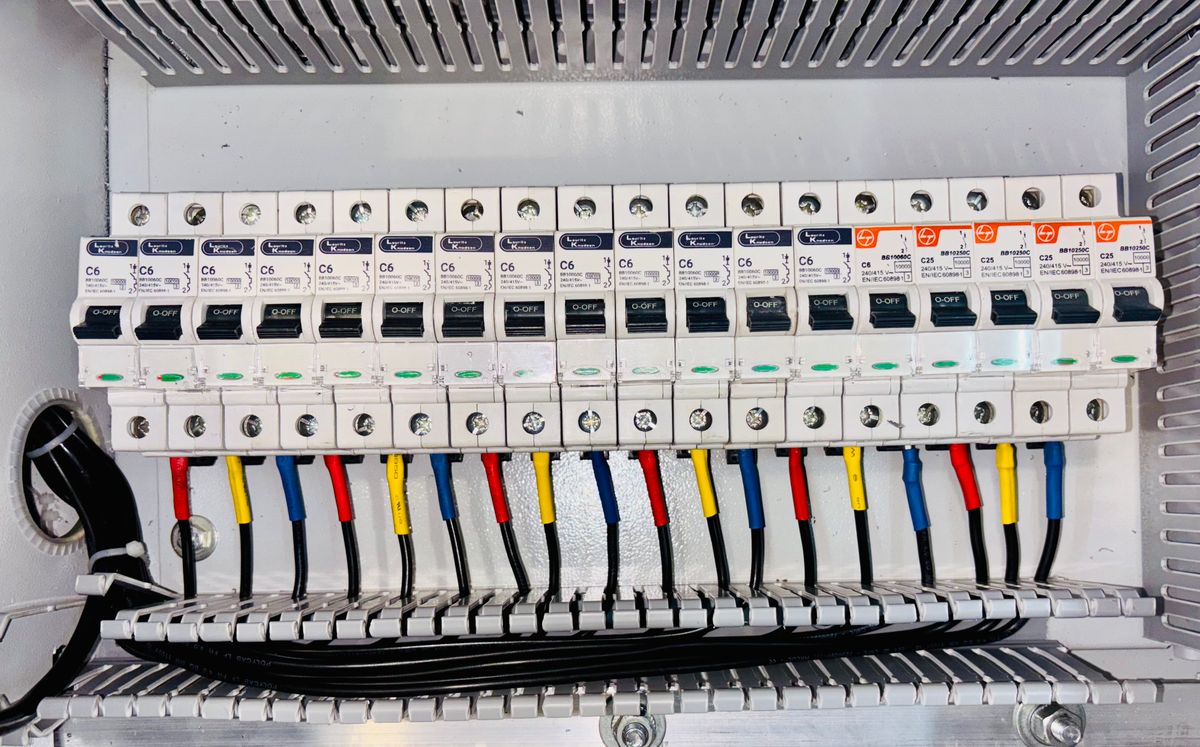
Short answer: Losing power to half your house usually means one of the two main 120-volt incoming power lines has failed, a condition known as a lost leg or phase. This can be caused by a blown utility transformer fuse, a damaged overhead service wire, a loose bus bar connection, or a failing main breaker. Turn off major 240-volt appliances immediately to prevent back-feeding and equipment damage, then contact your electric utility and a licensed electrician to inspect the service entrance.
Symptoms of a Lost Electrical Phase
Standard residential electrical panels receive 240 volts of electricity split into two separate 120-volt legs, or phases, known as Leg A and Leg B. Individual breakers in your panel alternate between these two legs down the bus bars. When one incoming leg loses voltage, roughly half of the 120-volt circuits in your home stop working. You may notice that lights and outlets in specific rooms operate normally while adjacent rooms or appliances are completely dark. Large 240-volt appliances, such as central air conditioners, electric water heaters, clothes dryers, and electric ranges, require both legs to operate. When one leg fails, these appliances may stop working entirely, or their lights and digital displays may turn on while the heating elements or compressors fail to engage.
Causes of Single-Phase Power Loss
Single-phase power loss stems from issues on either the electric utility side or the homeowner side of the service connection. Understanding the difference helps determine who is responsible for the repair. Utility-side issues include a blown fuse on the transformer pole, a severed overhead line, or a loose connection at the weatherhead. Weather events, fallen tree branches, and equipment degradation can break one of the high-voltage lines supplying the transformer. Home-side issues occur within the meter base, main disconnect, or breaker panel. A failing main circuit breaker can lose internal connectivity on one pole while remaining latched. Thermal stress or physical vibration can loosen the main lug connection where the utility wires attach to the panel. Corroded or burnt aluminum bus bars can also interrupt power to one side of the panel. An open neutral wire presents a different, dangerous condition. If the neutral connection breaks while both hot legs remain active, voltage becomes unbalanced across your home circuits.
Safety Risks and What Not to Touch
Losing one leg of electrical service creates severe safety risks. If a 240-volt appliance remains switched on during a single-phase outage, electricity can flow through the appliance internal circuitry from the live leg to the dead leg. This process, known as back-feeding, can cause dead circuits to unexpectedly energize, creating a shock hazard. An open neutral is even more hazardous. Without a stable neutral path, voltage on one 120-volt leg can drop close to zero while the voltage on the opposite leg spikes dramatically higher. High voltage damages sensitive electronics, appliances, and LED light fixtures while creating a serious fire risk inside the walls. Never attempt to open the main electrical panel dead front cover, handle meter sockets, or touch overhead service wires. Homeowners should never attempt to tighten main lug screws or work inside an energized panel enclosure. Electrical work in Texas requires licensing through the Texas Department of Licensing and Regulation (TDLR) to ensure safety and compliance with national electrical codes.
Safe Homeowner Inspections and Checks
Homeowners can safely perform a few initial troubleshooting steps before calling for professional help. First, check with neighbors or view your electric utility outage map. If your neighbors also report partial power, the issue is on the utility side. Second, look at your main breaker panel without removing any protective covers. Check if individual circuit breakers or the main dual-pole breaker have tripped to a center position. If the main breaker appears tripped, switch it fully to the OFF position once, then back to the ON position. Do not repeatedly reset a breaker that continues to trip. Third, turn off the breakers for all large 240-volt appliances, including your HVAC system, electric oven, and water heater. Turning these off prevents back-feeding and protects sensitive compressors and control boards from voltage fluctuations when power is restored.
Professional Diagnostics and Repair Options
A TDLR-licensed electrician uses specialized testing tools to safely isolate the point of failure. The technician measures voltage across both hot legs at the main breaker terminals, checking for 240 volts between legs and 120 volts from each leg to neutral. If low or zero voltage is detected on one leg at the incoming side of the main breaker, the electrician checks the meter socket and service drop conductors. If the voltage drops only on the load side of the main breaker, the main breaker itself has suffered internal contact failure and requires replacement. If the electrician discovers overheated bus bars, melted insulation, or severe pitting on the panel assembly, repairing single components may not be safe. When panel busing is damaged, full electrical panel replacement is necessary. If the issue is isolated to a faulty main breaker or a loose terminal lug on undamaged busing, replacing the main breaker or re-terminating the conductor resolves the issue.
North Texas Climate and Infrastructure Factors
Dallas-Fort Worth properties face environmental conditions that contribute directly to single-phase electrical failures. Extremely high summer temperatures cause heavy thermal loads on air conditioning systems. Continuous high amperage draws combined with intense attic and exterior wall heat accelerate wear on main breakers, panel lugs, and line connections. In older DFW neighborhoods established in the mid-twentieth century, legacy electrical panels may feature aging components that are susceptible to thermal fatigue. Severe weather events in North Texas bring strong wind gusts and hail that stress overhead service drops. Tree branches rubbing against overhead service wires can chafe through insulation and snap individual line conductors. Ground movement is another local factor. DFW soil contains expansive clay that swells when saturated by heavy rain and shrinks during extended summer droughts. This shifting ground moves foundation walls and outdoor meter racks. Underground service laterals buried in expansive clay soil can pull away from meter bases, shearing internal connections or straining line conductors.
What Drives Repair Costs
Repair costs for partial power loss depend heavily on where the fault originated and the scope of work required. Utility-side repairs to overhead drop lines or transformer fuses are typically addressed by the electric utility at no direct charge to the property owner. If the failure occurs on the customer side of the electric meter, several variables influence costs. Simple main breaker replacements cost significantly less than complete service panel upgrades or meter socket repairs. The physical accessibility of the panel, whether located in a tight utility closet or on an exterior wall, affects labor time. Emergency service requests outside standard business hours add to overall labor expenses. If a panel replacement or service upgrade is necessary, local municipal permit fees, utility disconnect-reconnect coordination fees, and mandatory code upgrades will influence the overall project cost.
Common Questions
Can a tripped individual breaker cause half my house to lose power?
No. An individual single-pole breaker only controls one 120-volt circuit. A tripped double-pole breaker can shut off power to a single 240-volt appliance, but it will not turn off multiple 120-volt circuits across different rooms. Losing power across multiple circuits indicates a problem with a main supply leg, main breaker, or utility line.
Should I turn off my main breaker if half the power goes out?
If you suspect an open neutral or see lights dimming and brightening dramatically, switching off the main breaker is a safe precaution. Turning off the main breaker cuts power to the entire panel, protecting your appliances and electronics from dangerous voltage surges until a licensed electrician inspects the system.
Who is responsible for repairing the wires attached to my roof?
The utility company owns and maintains the overhead wire coming from the utility pole to your home. However, the point of attachment, weatherhead, service mast pipe, and meter enclosure are the homeowner responsibility. If tree branches damage the weatherhead or pull the service pipe off the wall, a licensed electrician must repair the attachment before the utility will re-energize the line.
Why are some lights flickering or glowing extra bright during a partial outage?
Lights glowing unusually bright or flickering wildly during a partial outage typically indicate an open neutral condition. When the neutral path is broken, voltage fluctuates wildly between the two hot legs based on which appliances are plugged in. Shut off power at the main breaker immediately, as high voltage can damage electronics and cause electrical fires.