
Countertop Buying Guide
Short answer: Choosing the right kitchen countertop requires balancing durability, heat tolerance, maintenance requirements, and structural support. Natural stone like granite...
By Everyday Home Advice Editorial Team
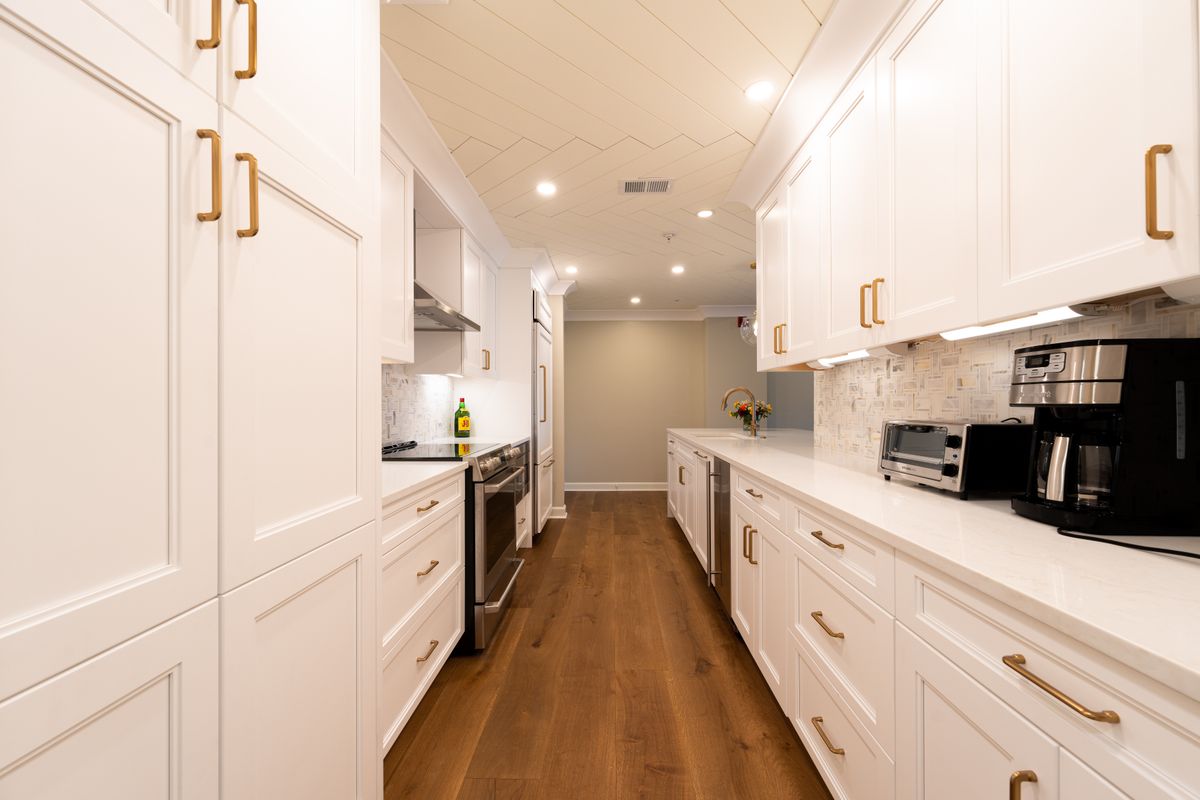
Short answer: Choosing the right kitchen countertop requires balancing durability, heat tolerance, maintenance requirements, and structural support. Natural stone like granite provides high heat resistance but requires periodic sealing. Engineered quartz offers stain resistance and low maintenance, but resin binders can discolor under direct sunlight or extreme heat. In the Dallas-Fort Worth area, expansive clay soils cause floor and cabinet movement that puts extra stress on rigid slabs, making accurate laser templating, perimeter cabinet leveling, and cantilever support critical to prevent cracked seams and broken slabs.
Primary countertop materials and performance characteristics
Selecting a countertop material involves evaluating how different surfaces handle daily kitchen tasks, moisture exposure, and hot cookware.
Quartz (Engineered Stone)
Engineered quartz consists of crushed natural quartz aggregates bound together with polymer resins and pigments. This manufacturing process produces a non-porous surface that resists liquid stains, acid etching, and bacteria growth without needing sealers. Quartz offers uniform color and pattern consistency across slabs. However, the polymer resin binder makes quartz vulnerable to thermal shock from hot pans placed directly on the surface, and direct solar exposure can cause yellowing over time.
Granite
Granite is a natural igneous rock quarried in solid blocks and sliced into slabs. Every slab features unique veining, mineral deposits, and color variations. Granite provides exceptional heat tolerance, allowing hot cookware to rest on the surface without melting or blistering. Because natural granite is porous, it requires periodic application of a penetrating sealer to prevent oil, wine, and water-based stains from absorbing into the stone.
Porcelain Slab
Porcelain slab countertops are manufactured from dense ceramic clays fired at extreme temperatures. The resulting material is non-porous, completely immune to ultraviolet light degradation, and highly resistant to high heat, scratching, and chemical staining. Because porcelain slabs are thinner than traditional stone, installation requires specialized handling equipment and fabricators trained in cutting thin, rigid materials to prevent edge chipping during installation.
Solid Surface and Laminate
Solid surface countertops are made from synthetic acrylic and polyester resins. They feature invisible field seams, non-porous surfaces, and minor scratch repair capability through light sanding. However, solid surfaces soft-melt under hot cookware. Laminate surfaces consist of printed paper layers pressure-fused to a particleboard core. While laminate is economical and light, water penetration at sink cutouts or seams can cause the particleboard substrate to swell and delaminate permanently.
Butcher Block
Wood butcher block countertops consist of hardwood planks glued along the edges or end grains. Butcher block creates a warm, soft work surface that is friendly to kitchen cutlery. Wood requires routine applications of food-safe mineral oil or conditioner to keep the fibers from drying out and cracking. Standing water around sink decks will cause wood fibers to blacken, rot, or swell if left unprotected.
DFW environmental factors that affect countertop performance
Local environmental conditions in North Texas place specific demands on rigid slab installations and surface finishes. Expansive clay soil beneath residential foundations expands when wet and contracts during hot, dry summer months. This cyclical moisture shift causes subfloor movement that translates into subtle tilting, racking, or flexing of base kitchen cabinets. Rigid stone slabs placed across unlevel or shifting cabinets experience uneven tension. Over time, cabinet racking causes hairline cracks near narrow slab bridges around sinks or causes epoxy seams to split apart. High mineral content in North Texas municipal water supplies creates stubborn white calcium and magnesium scale on faucets and sink decks. Cleaning hard water buildup with acidic household descalers can etch natural granite or marble surfaces if the protective sealer has worn away. Intense sunlight streaming through unshaded southern or western kitchen windows exposes countertops to high ultraviolet light. In engineered quartz and solid surface materials, UV radiation breaks down chemical binders over time, causing pale resins to turn yellow or dark pigments to shift in shade.
Fabrication, templating, and structural support requirements
A successful countertop installation depends on accurate digital measuring and solid structural prep work before the slab arrives on site. Professional fabricators use digital laser scanners to capture exact cabinet wall profiles, seam locations, and squareness. Before templating begins, base cabinets must be fastened securely to wall studs and leveled across the entire run using solid hardwood shims. Any sagging or twist in the cabinet frames must be corrected prior to slab measurement. Large islands with cantilevered seating overhangs require structural reinforcement. Slabs extending beyond the cabinet base require flat steel support plates or hidden steel brackets mounted directly to the cabinet framing. Unsupported stone overhangs risk cracking or snapping when weight is applied to the edge. Undermount sinks require mechanical undermount brackets and silicone adhesive to transfer the weight of a full water basin directly to the cabinet walls rather than hanging from the slab edge alone. Narrow stone strips running in front of and behind cooktops or sinks require embedded fiberglass or steel rod reinforcements beneath the slab to prevent snapping during transport and placement. Safe countertop replacement requires properly disconnecting water, gas, and electrical lines. In Texas, plumbing and electrical modifications connected to sink, disposal, cooktop, or dishwasher replacement must be completed by tradespeople licensed through the Texas Department of Licensing and Regulation (TDLR). General home improvement contractors are not licensed at the state level in Texas.
What drives countertop replacement and installation costs
Countertop project expenses are dictated by material traits, layout complexity, and preparation requirements rather than simple square footage measurements. Material rarity, origin, and thickness drive the baseline slab price. Thicker slabs cost more in raw material and require heavier labor teams to carry and set in place. Slabs with directional veining require extra material allowance during fabrication to ensure pattern matching across seams, increasing total slab counts. The physical layout determines labor complexity. Countertops with multiple wall turns, specialized edge profiles, curved corners, and multiple cutouts for undermount sinks, drop-in cooktops, or pop-up electrical outlets require extensive shop machining and edge polishing time. Demolition and site preparation add work hours to the project. Removing existing cast concrete, full-bed tile, or heavy stone countertops requires structural tear-out and waste disposal. Adjusting or leveling settled base cabinets to ensure a flat substrate further increases labor requirements.
Repair options versus complete countertop replacement
Minor surface damage can often be restored in place, while structural failures require full slab replacement.
Repairable Damage
Small edge chips or surface pockmarks in granite and quartz can be filled using color-matched clear epoxy or acrylic resin, cured under ultraviolet light, and scraped flush. Open or cracked epoxy seams between slab sections can be scraped clean, re-aligned using vacuum seam setters, and filled with fresh color-matched resin. Superficial scratches or minor dulling on acrylic solid surfaces can be buffed out using progressively finer sanding pads. Etched mineral rings on natural stone can be honed with diamond polishing pastes and re-sealed.
Damage Requiring Replacement
Full-depth fracture lines extending across a slab section caused by cabinet sagging or heavy impact cannot be structurally welded back together seamlessly. Blistered, scorched, or melted resin sections on quartz or solid surface countertops resulting from direct hot pan contact cannot be repaired cleanly. * Water-swollen laminate substrates or rotted butcher block sections around sink rims require replacing the affected surface section.
Maintenance strategies to protect your investment
Routine care preserves surface finishes and prevents structural stress on countertop materials. Always place trivets, hot pads, or insulated mats under hot skillets, roasting pans, air fryers, and slow cookers. Thermal shock can instantly crack natural stone and scorch the resin in engineered quartz. Clean countertops using pH-neutral soap and warm water applied with soft microfiber cloths. Avoid harsh abrasive scouring pads, concentrated bleach, or acidic descaling products that degrade stone sealers or dull synthetic glazes. Apply a high-quality penetrating impregnating sealer to natural granite surfaces regularly. Test the seal periodically by dropping a small pool of water on the stone; if the water darkens the stone within several minutes rather than remain beaded on top, re-apply sealer immediately. Install low-emissivity (low-E) window treatments, solar screens, or interior blinds on kitchen windows that receive strong direct afternoon light to shield engineered surfaces from ultraviolet resin degradation.
Common questions
Can foundation movement cause granite countertops to crack?
Yes. When expansive clay soils shift, base cabinets can unlevel or twist out of square. Because natural stone slabs are rigid and heavy, uneven cabinet support creates point loads and tension across the slab, leading to split seams or full cracks near sink cutouts.
Why are resin-based countertops turning yellow near kitchen windows?
Polymer resins used to bind engineered quartz and solid surface materials react to strong ultraviolet radiation. Direct, unfiltered sunlight coming through unshaded windows breaks down these resins, leading to fading or yellow discoloration over time.
Do I need a licensed plumber when replacing a kitchen countertop?
Yes. Reconnecting supply lines, drain traps, garbage disposals, and gas supply lines for cooktops involves plumbing and gas systems. In Texas, these tasks should be completed by a plumber licensed through the Texas Department of Licensing and Regulation (TDLR).
Can engineered quartz be used in outdoor kitchens?
Engineered quartz is not designed for outdoor installation in areas exposed to direct sun and summer heat. UV rays break down the resin binders, causing fading and warping, while extreme seasonal temperature changes increase the risk of thermal stress cracking. Natural granite or porcelain slabs are far better suited for outdoor kitchens.